
- Buy Crypto
- Markets
 Futures
- Spot
- Copy Trade
 Earn
Earn- More
a16z Predicts Four Major Trends Leading the Way by 2026

Original Title: Big Ideas 2026: Part 1
Original Author: a16z New Media
Translation: Peggy, BlockBeats
Abstract: Over the past year, the breakthroughs in AI have shifted from model capabilities to system capabilities: understanding long sequences, maintaining consistency, performing complex tasks, and collaborating with other intelligent agents. As a result, the focus of industrial advancement has shifted from isolated innovations to redefining infrastructure, workflows, and user interaction.
In the annual "Big Ideas 2026," a16z's four investment teams provided key insights for 2026 from four dimensions: infrastructure, growth, health, and the interactive world.
Essentially, they collectively portray a trend: AI is no longer just a tool but an environment, a system, an acting entity parallel to humans.
The following are the four teams' assessments of the structural changes in 2026:

As investors, our job is to delve into every corner of the tech industry, understand its operational context, and assess the next evolution direction. Therefore, every December, we invite each investment team to share what they believe will be the "big idea" that tech entrepreneurs will tackle in the coming year.
Today, we bring you the viewpoints of the Infrastructure, Growth, Bio + Health, and Speedrun teams. The perspectives of other teams will be released tomorrow, so stay tuned.
Infrastructure Team
Jennifer Li: Startups Will Tame the "Chaos" of Multi-Modal Data
Unstructured, multi-modal data has always been the biggest bottleneck for enterprises and the largest untapped treasure trove. Every company is inundated with PDFs, screenshots, videos, logs, emails, and various semi-structured "data mud." Models are becoming increasingly intelligent, but the inputs are getting more chaotic—this leads to RAG systems generating illusions, causing intelligent agents to err in subtle and high-cost ways and keeping critical workflows highly reliant on manual quality checks.
Today, the real limiting factor for AI companies is data entropy: in an unstructured world that holds 80% of a company's knowledge, freshness, structure, and authenticity are continuously decaying.
It is for this reason that unraveling the "tangled mess" of unstructured data is becoming a generational entrepreneurial opportunity. Enterprises need a continuous approach to clean, structure, validate, and govern their multi-modal data to truly empower downstream AI workloads. The use cases are widespread: contract analysis, user onboarding, claims processing, compliance, customer service, procurement, engineering retrieval, sales enablement, analytics pipelines, and all intelligent agent workflows that depend on reliable context.
A platform-based startup that can extract structure from documents, images, and videos, resolve conflicts, repair data pipelines, and maintain a fresh and searchable data flow will hold the "key to the kingdom" of enterprise knowledge and processes.
Joel de la Garza: AI Will Reshape the Hiring Conundrum of Security Teams
Over the past decade, the biggest headache for CISOs has been recruitment. From 2013 to 2021, the global cybersecurity job gap has surged from less than 1 million to 3 million. The reason is that security teams require highly specialized technical talent, yet they have them engaged in exhausting Level 1 security tasks, such as log parsing, which almost no one wants to do.
The deeper root of the problem is this: security teams have created their own grunt work. They buy tools for "undifferentiated detect-everything," so the team has to "review everything" — which in turn creates an artificial "labor scarcity," forming a vicious cycle.
By 2026, AI will break this cycle by automating most repetitive and redundant tasks, significantly reducing the talent gap. Anyone who has been in a large security team knows that half of the work can be completely automated; the issue is, when you are overwhelmed with work every day, you can't step back to think about what should be automated. Truly AI-native tools will do this for security teams, finally allowing them to focus back on what they originally wanted to do: track attackers, build systems, and fix vulnerabilities.
Malika Aubakirova: Intelligent Agent-Native Infrastructure Will Become the "Standard"
In 2026, the most significant infrastructure shock will not come from the outside but from within. We are moving from "human speed, low concurrency, predictable" traffic to "intelligent agent speed, recursive, bursty, massive" workloads.
The current enterprise backend is designed for a 1:1 "from human action to system response" model. It is not suited to handle a single "goal" trigger from an intelligent agent that sets off 5000 subtasks, database queries, and internal API calls in a millisecond-level recursive storm. When an intelligent agent tries to refactor a codebase or remediate security logs, it is not like a user; to traditional databases or rate limiters, it is more like a DDoS attack.
To build systems for 2026's intelligent agent workloads, the control plane must be redesigned. "Agent-native" infrastructure will start to rise. The next-generation systems must treat the "thundering herd effect" as the default state. Cold starts must be shortened, latency fluctuations must converge, and concurrency limits must scale by orders of magnitude.
The real bottleneck will shift towards coordination itself: routing, lock control, state management, and policy enforcement in large-scale parallel execution. The platform that can survive in the flood of tool invocations will emerge as the ultimate winner.
Justine Moore: Creative Tools Moving Towards Multimodality
We already have the basic building blocks of AI storytelling: generative sound, music, images, and video. However, as long as the content is more than just a short clip, achieving close to director-level control is still time-consuming, painful, and even impossible.
Why can't we feed a 30-second video clip to a model, have it create a new character using the reference images and sound we provide, and continue shooting the same scene? Why can't the model "reshoot" from a new angle or have the action match the reference video?
2026 will be the year when AI truly accomplishes multimodal creation. Users will be able to feed any form of reference content to the model to collaboratively generate new works or edit existing scenes.
We have already seen the emergence of first-generation products such as Kling O1 and Runway Aleph, but this is just the beginning—both the model layer and the application layer require new innovations.
Content creation is one of AI's "killer apps," and I anticipate multiple successful products emerging across various user groups—from meme creators to Hollywood directors.
Jason Cui: AI-Native Data Stack Will Continue to Iterate
Over the past year, the "modern data stack" has been visibly consolidating. Data companies are transitioning from modular services such as collection, transformation, and computation to bundled and unified platforms (e.g., Fivetran/dbt merger, Databricks' expansion).
While the ecosystem has matured, we are still in the early stages of a truly AI-native data architecture. We are excited about how AI will continue to transform various parts of the data stack and are beginning to see data and AI infrastructure irreversibly merging.
We are particularly focused on the following directions:
How data will continue to flow towards high-performance vector databases beyond traditional structured storage
How AI agents will address the "context problem": continuously accessing the correct data semantics and business definitions to enable applications like "conversing with data" to maintain a consistent understanding across multiple systems
How traditional BI tools and spreadsheets will evolve as data workflows become more intelligent and automated
Yoko Li: We Will Truly "Step Into the Heart of Video"
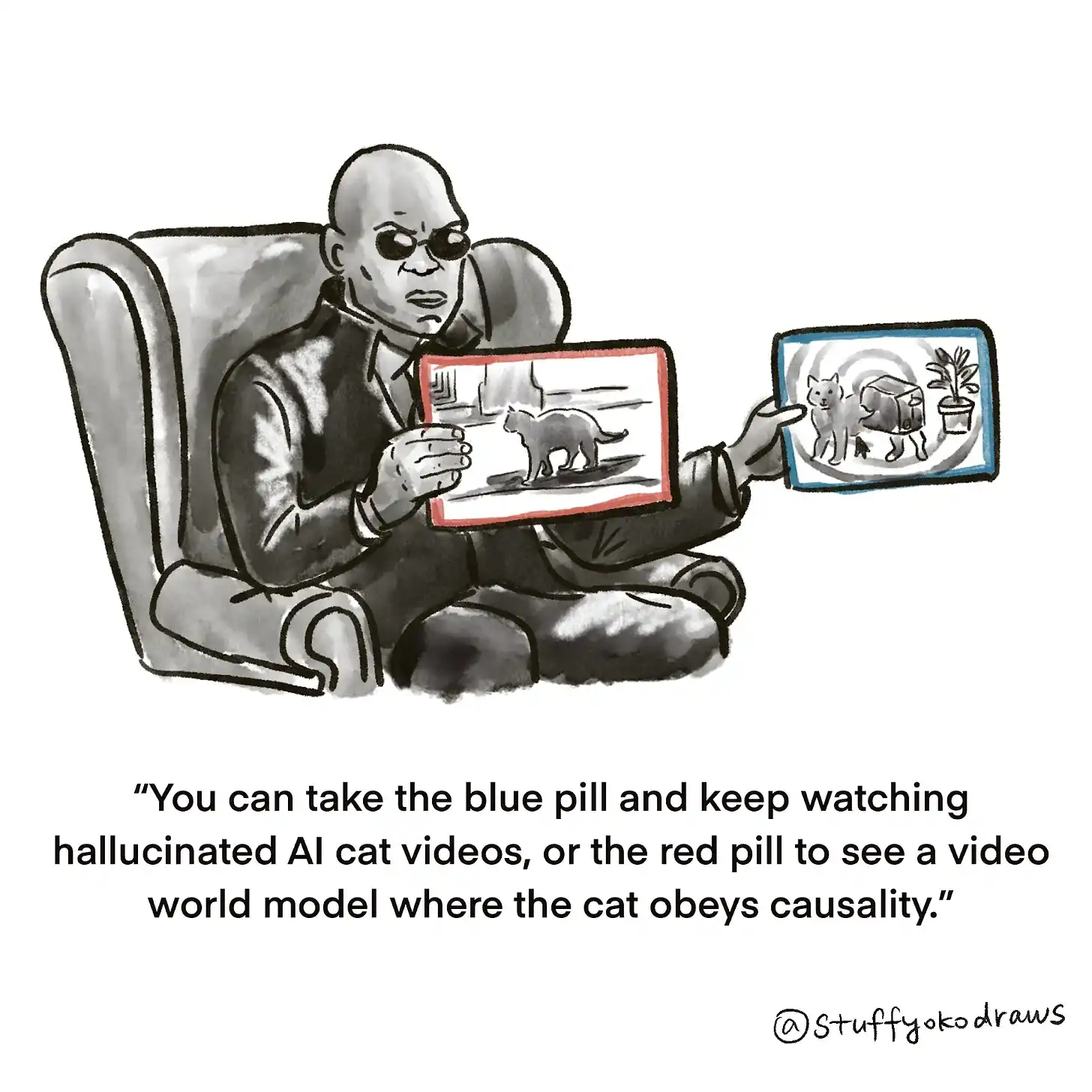
By 2026, video will no longer be a passive viewing content but will become a place we can "step into." Video models will finally be able to understand time, remember presented content, and react to our actions while maintaining a sense of realism and coherence that is closer to the real world, rather than just outputting seconds of unrelated images.
These systems will be able to sustain characters, objects, and physical laws over longer periods, allowing actions to have real impact, enabling causality to unfold. Video will thus transition from a medium to a space where things can be constructed: robots can train within it, game mechanics can evolve, designers can prototype, and agents can learn through "doing."
The presented world will no longer be like a short video but more like a "living environment," beginning to narrow the gap between perception and action. This will be the first time humans can truly "inhabit" the video they create.
Growth Team
Sarah Wang: The Role of the Enterprise "Record System" Will Begin to Shake
By 2026, the true transformation of enterprise software will come from a core shift: the central position of the record system will finally start to decline.
AI is shrinking the distance between "intent" and "execution": models can directly read, write, and infer enterprise operational data, transforming ITSM, CRM, and other systems from passive databases to autonomously executing workflow engines.
With the rapid advancement of inference models and intelligent agent workflows, these systems will no longer just respond to demands but will be able to predict, coordinate, and execute end-to-end processes.
The interface will become a dynamic layer of intelligent agents, while the traditional systems record layer will gradually step back into a "cheap persistent storage," with strategic leadership giving way to players who control the intelligent execution environment.
Alex Immerman: Vertical AI Upgrades from "Information Retrieval and Inference" to "Multiplayer Collaboration Mode"
AI is driving explosive growth in vertical industry software. Companies in the medical, legal, housing sectors have broken $100 million ARR in a short period; finance and accounting are following closely.
The initial revolution was in information retrieval: searching, extracting, summarizing information.
2025 brought about breakthroughs: Hebbia parsed financial statements, Basis reconciled trial balances across multiple systems, EliseAI diagnosed maintenance issues and scheduled vendors.
2026 will unlock the "multiplayer mode."
Vertical software inherently possesses industry-specific interfaces, data, and integration capabilities, and vertical industry work is fundamentally collaborative: buyers, sellers, tenants, consultants, suppliers, each with different permissions, processes, and compliance requirements.
Today, AI operates in silos, leading to chaotic handoffs: AI analyzing contracts cannot communicate with the CFO's modeling preferences; maintenance AI is unaware of on-site personnel's commitments to tenants.
Multiplayer mode AI will break this pattern: automatically coordinate among stakeholders; maintain context; synchronize changes; automatically route to subject matter experts; allow adversaries' AI to negotiate within boundaries and flag asymmetries for human review.
As transactions rise in quality due to "multi-agent + multi-human" collaboration, switching costs will soar—the collaboration network will become the long-missing "moat" of AI applications.
Stephenie Zhang: The Future Object of Creation Will No Longer Be Human, but Intelligent Agents
By 2026, people will interact with networks through intelligent agents, and human-centric content optimization will lose its original significance.
We optimized for predictable human behavior: Google rankings; Amazon top listings; news articles with 5W+1H and enticing openings.
Humans may overlook deep insights buried on the fifth page, but intelligent agents won't.
Software will also change accordingly. Applications were designed for human eyes and clicks in the past, with optimization meaning better UI and processes; as intelligent agents take over retrieval and interpretation, the importance of visual design diminishes: engineers no longer stare at Grafana, AI SREs automatically parse telemetry and provide insights in Slack; sales teams no longer manually flip through CRM, intelligent agents will automatically summarize patterns and insights.
We are no longer designing for humans but for intelligent agents. The new optimization is no longer at the visual level but at machine readability. This will completely transform content creation methods and toolsets.
Santiago Rodriguez: The KPI of "Screen Time" Will Disappear
Over the past 15 years, "screen time" has been the gold standard for measuring product value: Netflix's viewing time; mouse clicks in healthcare systems; minutes users spend on ChatGPT
However, in the upcoming era of "outcome-based pricing," screen time will be completely eliminated.
We are already seeing hints of this: ChatGPT's DeepResearch query requires almost no screen time yet provides tremendous value; Abridge automatically logs doctor-patient conversations and handles follow-up work, allowing doctors to hardly look at the screen; Cursor completes the development of entire applications, and engineers are already planning the next phase; Hebbia automatically generates a pitch deck from a large number of public documents, allowing investment analyst to finally get some sleep
Challenges come along with this shift: companies need to find more complex ROI measurement methods—doctor satisfaction, developer productivity, analyst well-being, user happiness... all of these rise with AI.
Companies that can tell the clearest ROI story will continue to succeed.
Bio+Health Team (Biological and Health Direction)
Julie Yoo: "Health MAUs" Becoming Core User Group
By 2026, a new healthcare user group will take center stage: "Health MAUs" (monthly active healthy individuals).
Traditional healthcare mainly serves three types of people:
- Sick MAUs: high-cost, periodic demand individuals
- Sick DAUs: such as long-term ICU patients
- Healthy YAUs: people who rarely seek medical attention
Healthy YAUs can become Sick MAUs/DAUs at any time, and preventative care could originally delay this transformation. However, proactive monitoring and testing are almost not covered by the current "treatment-oriented" healthcare system.
The emergence of Health MAUs has changed this structure: they are not sick but are willing to regularly monitor their health, making them the largest potential group of individuals.
We anticipate that AI-native startups + "repackaging" of traditional institutions will join in to provide periodic health services.
As AI reduces the cost of healthcare delivery, preventative-focused insurance products emerge, and users are willing to pay for subscription services, "Health MAUs" will become the most promising customer segment for the next generation of health tech—continuously active, data-driven, and prevention-focused.
Speedrun Team (Gaming, Interactive Media, and World Modeling Direction)
Jon Lai: World Modeling Will Reshape Narrative
By 2026, AI world modeling will fundamentally transform storytelling through interactive virtual worlds and the digital economy. Technologies like Marble (World Labs) and Genie 3 (DeepMind) can generate complete 3D worlds from text, allowing users to explore them like playing a game.
As creators adopt these tools, a new form of storytelling will emerge—possibly giving rise to a "generated version of Minecraft," where players collaboratively build a vast, evolving universe.
These worlds will blur the boundaries between players and creators, creating a shared dynamic reality. Different genres such as fantasy, horror, and adventure can coexist; within them, the digital economy will thrive, enabling creators to earn income through asset creation, player guidance, and interactive tool development.
These generated worlds will also serve as training grounds for AI agents, robots, and even potential AGI. The world model brings not just a new genre of games but rather a whole new creative medium at the forefront of the economy.
Josh Lu: "My Year"
2026 will be "My Year": products will no longer be mass-produced for the "average consumer" but tailored to "you."
In education, Alphaschool's AI mentor will match the pace and interests of each student.
In health, AI will customize supplements, exercise plans, and diet programs for you.
In media, AI will remix content in real-time to suit your taste.
In the past hundred years, giants have thrived by finding the "average user"; the giants of the next hundred years will thrive by finding the "individual within the average user."
In 2026, the world will no longer optimize for everyone but will optimize for "you."
Emily Bennett: The First AI-Native University Will Emerge
In 2026, we will witness the first truly AI-native university—an institution built around intelligent systems from scratch. Traditional universities have applied AI for grading, tutoring, and scheduling, but now a deeper transformation is emerging: an "adaptive academic organism" capable of real-time learning and self-optimization.
You can imagine a university where courses, guidance, research collaborations, and campus operations are all dynamically adjusted in real time based on feedback loops; schedules self-optimize; reading lists dynamically update as new research emerges; and each student's learning path evolves in real time.
Precedents have already emerged: Arizona State University's partnership with OpenAI has resulted in hundreds of AI projects; the State University of New York has incorporated AI literacy into general education.
In an AI-native university:
- Professors become "Learning System Architects": designing data, tweaking models, teaching students how to scrutinize machine reasoning.
- Evaluation methods will shift to "AI mindfulness" assessment: not asking if students used AI, but how they used AI.
With industries in dire need of talent capable of collaborating with intelligent systems, this university will become the "talent engine" of the new economy.
You may also like

Token Cannot Compound, Where Is the Real Investment Opportunity?

February 6th Market Key Intelligence, How Much Did You Miss?

China's Central Bank and Eight Other Departments' Latest Regulatory Focus: Key Attention to RWA Tokenized Asset Risk
Foreword: Today, the People's Bank of China's website published the "Notice of the People's Bank of China, National Development and Reform Commission, Ministry of Industry and Information Technology, Ministry of Public Security, State Administration for Market Regulation, China Banking and Insurance Regulatory Commission, China Securities Regulatory Commission, State Administration of Foreign Exchange on Further Preventing and Dealing with Risks Related to Virtual Currency and Others (Yinfa [2026] No. 42)", the latest regulatory requirements from the eight departments including the central bank, which are basically consistent with the regulatory requirements of recent years. The main focus of the regulation is on speculative activities such as virtual currency trading, exchanges, ICOs, overseas platform services, and this time, regulatory oversight of RWA has been added, explicitly prohibiting RWA tokenization, stablecoins (especially those pegged to the RMB). The following is the full text:
To the people's governments of all provinces, autonomous regions, and municipalities directly under the Central Government, the Xinjiang Production and Construction Corps:
Recently, there have been speculative activities related to virtual currency and Real-World Assets (RWA) tokenization, disrupting the economic and financial order and jeopardizing the property security of the people. In order to further prevent and address the risks related to virtual currency and Real-World Assets tokenization, effectively safeguard national security and social stability, in accordance with the "Law of the People's Republic of China on the People's Bank of China," "Law of the People's Republic of China on Commercial Banks," "Securities Law of the People's Republic of China," "Law of the People's Republic of China on Securities Investment Funds," "Law of the People's Republic of China on Futures and Derivatives," "Cybersecurity Law of the People's Republic of China," "Regulations of the People's Republic of China on the Administration of Renminbi," "Regulations on Prevention and Disposal of Illegal Fundraising," "Regulations of the People's Republic of China on Foreign Exchange Administration," "Telecommunications Regulations of the People's Republic of China," and other provisions, after reaching consensus with the Cyberspace Administration of China, the Supreme People's Court, and the Supreme People's Procuratorate, and with the approval of the State Council, the relevant matters are notified as follows:
(I) Virtual currency does not possess the legal status equivalent to fiat currency. Virtual currencies such as Bitcoin, Ether, Tether, etc., have the main characteristics of being issued by non-monetary authorities, using encryption technology and distributed ledger or similar technology, existing in digital form, etc. They do not have legal tender status, should not and cannot be circulated and used as currency in the market.
The business activities related to virtual currency are classified as illegal financial activities. The exchange of fiat currency and virtual currency within the territory, exchange of virtual currencies, acting as a central counterparty in buying and selling virtual currencies, providing information intermediary and pricing services for virtual currency transactions, token issuance financing, and trading of virtual currency-related financial products, etc., fall under illegal financial activities, such as suspected illegal issuance of token vouchers, unauthorized public issuance of securities, illegal operation of securities and futures business, illegal fundraising, etc., are strictly prohibited across the board and resolutely banned in accordance with the law. Overseas entities and individuals are not allowed to provide virtual currency-related services to domestic entities in any form.
A stablecoin pegged to a fiat currency indirectly fulfills some functions of the fiat currency in circulation. Without the consent of relevant authorities in accordance with the law and regulations, any domestic or foreign entity or individual is not allowed to issue a RMB-pegged stablecoin overseas.
(II)Tokenization of Real-World Assets refers to the use of encryption technology and distributed ledger or similar technologies to transform ownership rights, income rights, etc., of assets into tokens (tokens) or other interests or bond certificates with token (token) characteristics, and carry out issuance and trading activities.
Engaging in the tokenization of real-world assets domestically, as well as providing related intermediary, information technology services, etc., which are suspected of illegal issuance of token vouchers, unauthorized public offering of securities, illegal operation of securities and futures business, illegal fundraising, and other illegal financial activities, shall be prohibited; except for relevant business activities carried out with the approval of the competent authorities in accordance with the law and regulations and relying on specific financial infrastructures. Overseas entities and individuals are not allowed to illegally provide services related to the tokenization of real-world assets to domestic entities in any form.
(III) Inter-agency Coordination. The People's Bank of China, together with the National Development and Reform Commission, the Ministry of Industry and Information Technology, the Ministry of Public Security, the State Administration for Market Regulation, the China Banking and Insurance Regulatory Commission, the China Securities Regulatory Commission, the State Administration of Foreign Exchange, and other departments, will improve the work mechanism, strengthen coordination with the Cyberspace Administration of China, the Supreme People's Court, and the Supreme People's Procuratorate, coordinate efforts, and overall guide regions to carry out risk prevention and disposal of virtual currency-related illegal financial activities.
The China Securities Regulatory Commission, together with the National Development and Reform Commission, the Ministry of Industry and Information Technology, the Ministry of Public Security, the People's Bank of China, the State Administration for Market Regulation, the China Banking and Insurance Regulatory Commission, the State Administration of Foreign Exchange, and other departments, will improve the work mechanism, strengthen coordination with the Cyberspace Administration of China, the Supreme People's Court, and the Supreme People's Procuratorate, coordinate efforts, and overall guide regions to carry out risk prevention and disposal of illegal financial activities related to the tokenization of real-world assets.
(IV) Strengthening Local Implementation. The people's governments at the provincial level are overall responsible for the prevention and disposal of risks related to virtual currencies and the tokenization of real-world assets in their respective administrative regions. The specific leading department is the local financial regulatory department, with participation from branches and dispatched institutions of the State Council's financial regulatory department, telecommunications regulators, public security, market supervision, and other departments, in coordination with cyberspace departments, courts, and procuratorates, to improve the normalization of the work mechanism, effectively connect with the relevant work mechanisms of central departments, form a cooperative and coordinated working pattern between central and local governments, effectively prevent and properly handle risks related to virtual currencies and the tokenization of real-world assets, and maintain economic and financial order and social stability.
(5) Enhanced Risk Monitoring. The People's Bank of China, China Securities Regulatory Commission, National Development and Reform Commission, Ministry of Industry and Information Technology, Ministry of Public Security, State Administration of Foreign Exchange, Cyberspace Administration of China, and other departments continue to improve monitoring techniques and system support, enhance cross-departmental data analysis and sharing, establish sound information sharing and cross-validation mechanisms, promptly grasp the risk situation of activities related to virtual currency and real-world asset tokenization. Local governments at all levels give full play to the role of local monitoring and early warning mechanisms. Local financial regulatory authorities, together with branches and agencies of the State Council's financial regulatory authorities, as well as departments of cyberspace and public security, ensure effective connection between online monitoring, offline investigation, and fund tracking, efficiently and accurately identify activities related to virtual currency and real-world asset tokenization, promptly share risk information, improve early warning information dissemination, verification, and rapid response mechanisms.
(6) Strengthened Oversight of Financial Institutions, Intermediaries, and Technology Service Providers. Financial institutions (including non-bank payment institutions) are prohibited from providing account opening, fund transfer, and clearing services for virtual currency-related business activities, issuing and selling financial products related to virtual currency, including virtual currency and related financial products in the scope of collateral, conducting insurance business related to virtual currency, or including virtual currency in the scope of insurance liability. Financial institutions (including non-bank payment institutions) are prohibited from providing custody, clearing, and settlement services for unauthorized real-world asset tokenization-related business and related financial products. Relevant intermediary institutions and information technology service providers are prohibited from providing intermediary, technical, or other services for unauthorized real-world asset tokenization-related businesses and related financial products.
(7) Enhanced Management of Internet Information Content and Access. Internet enterprises are prohibited from providing online business venues, commercial displays, marketing, advertising, or paid traffic diversion services for virtual currency and real-world asset tokenization-related business activities. Upon discovering clues of illegal activities, they should promptly report to relevant departments and provide technical support and assistance for related investigations and inquiries. Based on the clues transferred by the financial regulatory authorities, the cyberspace administration, telecommunications authorities, and public security departments should promptly close and deal with websites, mobile applications (including mini-programs), and public accounts engaged in virtual currency and real-world asset tokenization-related business activities in accordance with the law.
(8) Strengthened Entity Registration and Advertisement Management. Market supervision departments strengthen entity registration and management, and enterprise and individual business registrations must not contain terms such as "virtual currency," "virtual asset," "cryptocurrency," "crypto asset," "stablecoin," "real-world asset tokenization," or "RWA" in their names or business scopes. Market supervision departments, together with financial regulatory authorities, legally enhance the supervision of advertisements related to virtual currency and real-world asset tokenization, promptly investigating and handling relevant illegal advertisements.
(IX) Continued Rectification of Virtual Currency Mining Activities. The National Development and Reform Commission, together with relevant departments, strictly controls virtual currency mining activities, continuously promotes the rectification of virtual currency mining activities. The people's governments of various provinces take overall responsibility for the rectification of "mining" within their respective administrative regions. In accordance with the requirements of the National Development and Reform Commission and other departments in the "Notice on the Rectification of Virtual Currency Mining Activities" (NDRC Energy-saving Building [2021] No. 1283) and the provisions of the "Guidance Catalog for Industrial Structure Adjustment (2024 Edition)," a comprehensive review, investigation, and closure of existing virtual currency mining projects are conducted, new mining projects are strictly prohibited, and mining machine production enterprises are strictly prohibited from providing mining machine sales and other services within the country.
(X) Severe Crackdown on Related Illegal Financial Activities. Upon discovering clues to illegal financial activities related to virtual currency and the tokenization of real-world assets, local financial regulatory authorities, branches of the State Council's financial regulatory authorities, and other relevant departments promptly investigate, determine, and properly handle the issues in accordance with the law, and seriously hold the relevant entities and individuals legally responsible. Those suspected of crimes are transferred to the judicial authorities for processing according to the law.
(XI) Severe Crackdown on Related Illegal and Criminal Activities. The Ministry of Public Security, the People's Bank of China, the State Administration for Market Regulation, the China Banking and Insurance Regulatory Commission, the China Securities Regulatory Commission, as well as judicial and procuratorial organs, in accordance with their respective responsibilities, rigorously crack down on illegal and criminal activities related to virtual currency, the tokenization of real-world assets, such as fraud, money laundering, illegal business operations, pyramid schemes, illegal fundraising, and other illegal and criminal activities carried out under the guise of virtual currency, the tokenization of real-world assets, etc.
(XII) Strengthen Industry Self-discipline. Relevant industry associations should enhance membership management and policy advocacy, based on their own responsibilities, advocate and urge member units to resist illegal financial activities related to virtual currency and the tokenization of real-world assets. Member units that violate regulatory policies and industry self-discipline rules are to be disciplined in accordance with relevant self-regulatory management regulations. By leveraging various industry infrastructure, conduct risk monitoring related to virtual currency, the tokenization of real-world assets, and promptly transfer issue clues to relevant departments.
(XIII) Without the approval of relevant departments in accordance with the law and regulations, domestic entities and foreign entities controlled by them may not issue virtual currency overseas.
(XIV) Domestic entities engaging directly or indirectly in overseas external debt-based tokenization of real-world assets, or conducting asset securitization activities abroad based on domestic ownership rights, income rights, etc. (hereinafter referred to as domestic equity), should be strictly regulated in accordance with the principles of "same business, same risk, same rules." The National Development and Reform Commission, the China Securities Regulatory Commission, the State Administration of Foreign Exchange, and other relevant departments regulate it according to their respective responsibilities. For other forms of overseas real-world asset tokenization activities based on domestic equity by domestic entities, the China Securities Regulatory Commission, together with relevant departments, supervise according to their division of responsibilities. Without the consent and filing of relevant departments, no unit or individual may engage in the above-mentioned business.
(15) Overseas subsidiaries and branches of domestic financial institutions providing Real World Asset Tokenization-related services overseas shall do so legally and prudently. They shall have professional personnel and systems in place to effectively mitigate business risks, strictly implement customer onboarding, suitability management, anti-money laundering requirements, and incorporate them into the domestic financial institutions' compliance and risk management system. Intermediaries and information technology service providers offering Real World Asset Tokenization services abroad based on domestic equity or conducting Real World Asset Tokenization business in the form of overseas debt for domestic entities directly or indirectly venturing abroad must strictly comply with relevant laws and regulations. They should establish and improve relevant compliance and internal control systems in accordance with relevant normative requirements, strengthen business and risk control, and report the business developments to the relevant regulatory authorities for approval or filing.
(16) Strengthen organizational leadership and overall coordination. All departments and regions should attach great importance to the prevention of risks related to virtual currencies and Real World Asset Tokenization, strengthen organizational leadership, clarify work responsibilities, form a long-term effective working mechanism with centralized coordination, local implementation, and shared responsibilities, maintain high pressure, dynamically monitor risks, effectively prevent and mitigate risks in an orderly and efficient manner, legally protect the property security of the people, and make every effort to maintain economic and financial order and social stability.
(17) Widely carry out publicity and education. All departments, regions, and industry associations should make full use of various media and other communication channels to disseminate information through legal and policy interpretation, analysis of typical cases, and education on investment risks, etc. They should promote the illegality and harm of virtual currencies and Real World Asset Tokenization-related businesses and their manifestations, fully alert to potential risks and hidden dangers, and enhance public awareness and identification capabilities for risk prevention.
(18) Engaging in illegal financial activities related to virtual currencies and Real World Asset Tokenization in violation of this notice, as well as providing services for virtual currencies and Real World Asset Tokenization-related businesses, shall be punished in accordance with relevant regulations. If it constitutes a crime, criminal liability shall be pursued according to the law. For domestic entities and individuals who knowingly or should have known that overseas entities illegally provided virtual currency or Real World Asset Tokenization-related services to domestic entities and still assisted them, relevant responsibilities shall be pursued according to the law. If it constitutes a crime, criminal liability shall be pursued according to the law.
(19) If any unit or individual invests in virtual currencies, Real World Asset Tokens, and related financial products against public order and good customs, the relevant civil legal actions shall be invalid, and any resulting losses shall be borne by them. If there are suspicions of disrupting financial order and jeopardizing financial security, the relevant departments shall deal with them according to the law.
This notice shall enter into force upon the date of its issuance. The People's Bank of China and ten other departments' "Notice on Further Preventing and Dealing with the Risks of Virtual Currency Trading Speculation" (Yinfa [2021] No. 237) is hereby repealed.

Former Partner's Perspective on Multicoin: Kyle's Exit, But the Game He Left Behind Just Getting Started

Why Bitcoin Is Falling Now: The Real Reasons Behind BTC's Crash & WEEX's Smart Profit Playbook
Bitcoin's ongoing crash explained: Discover the 5 hidden triggers behind BTC's plunge & how WEEX's Auto Earn and Trade to Earn strategies help traders profit from crypto market volatility.

Wall Street's Hottest Trades See Exodus

Vitalik Discusses Ethereum Scaling Path, Circle Announces Partnership with Polymarket, What's the Overseas Crypto Community Talking About Today?

Believing in the Capital Markets - The Essence and Core Value of Cryptocurrency

Polymarket's 'Weatherman': Predict Temperature, Win Million-Dollar Payout

$15K+ Profits: The 4 AI Trading Secrets WEEX Hackathon Prelim Winners Used to Dominate Volatile Crypto Markets
How WEEX Hackathon's top AI trading strategies made $15K+ in crypto markets: 4 proven rules for ETH/BTC trading, market structure analysis, and risk management in volatile conditions.

A nearly 20% one-day plunge, how long has it been since you last saw a $60,000 Bitcoin?

Raoul Pal: I've seen every single panic, and they are never the end.

Key Market Information Discrepancy on February 6th - A Must-Read! | Alpha Morning Report

2026 Crypto Industry's First Snowfall
The Harsh Reality Behind the $26 Billion Crypto Liquidation: Liquidity Is Killing the Market
Why Is Gold, US Stocks, Bitcoin All Falling?

Key Market Intelligence for February 5th, how much did you miss out on?

Wintermute: By 2026, crypto had gradually become the settlement layer of the Internet economy
Token Cannot Compound, Where Is the Real Investment Opportunity?
February 6th Market Key Intelligence, How Much Did You Miss?
China's Central Bank and Eight Other Departments' Latest Regulatory Focus: Key Attention to RWA Tokenized Asset Risk
Foreword: Today, the People's Bank of China's website published the "Notice of the People's Bank of China, National Development and Reform Commission, Ministry of Industry and Information Technology, Ministry of Public Security, State Administration for Market Regulation, China Banking and Insurance Regulatory Commission, China Securities Regulatory Commission, State Administration of Foreign Exchange on Further Preventing and Dealing with Risks Related to Virtual Currency and Others (Yinfa [2026] No. 42)", the latest regulatory requirements from the eight departments including the central bank, which are basically consistent with the regulatory requirements of recent years. The main focus of the regulation is on speculative activities such as virtual currency trading, exchanges, ICOs, overseas platform services, and this time, regulatory oversight of RWA has been added, explicitly prohibiting RWA tokenization, stablecoins (especially those pegged to the RMB). The following is the full text:
To the people's governments of all provinces, autonomous regions, and municipalities directly under the Central Government, the Xinjiang Production and Construction Corps:
Recently, there have been speculative activities related to virtual currency and Real-World Assets (RWA) tokenization, disrupting the economic and financial order and jeopardizing the property security of the people. In order to further prevent and address the risks related to virtual currency and Real-World Assets tokenization, effectively safeguard national security and social stability, in accordance with the "Law of the People's Republic of China on the People's Bank of China," "Law of the People's Republic of China on Commercial Banks," "Securities Law of the People's Republic of China," "Law of the People's Republic of China on Securities Investment Funds," "Law of the People's Republic of China on Futures and Derivatives," "Cybersecurity Law of the People's Republic of China," "Regulations of the People's Republic of China on the Administration of Renminbi," "Regulations on Prevention and Disposal of Illegal Fundraising," "Regulations of the People's Republic of China on Foreign Exchange Administration," "Telecommunications Regulations of the People's Republic of China," and other provisions, after reaching consensus with the Cyberspace Administration of China, the Supreme People's Court, and the Supreme People's Procuratorate, and with the approval of the State Council, the relevant matters are notified as follows:
(I) Virtual currency does not possess the legal status equivalent to fiat currency. Virtual currencies such as Bitcoin, Ether, Tether, etc., have the main characteristics of being issued by non-monetary authorities, using encryption technology and distributed ledger or similar technology, existing in digital form, etc. They do not have legal tender status, should not and cannot be circulated and used as currency in the market.
The business activities related to virtual currency are classified as illegal financial activities. The exchange of fiat currency and virtual currency within the territory, exchange of virtual currencies, acting as a central counterparty in buying and selling virtual currencies, providing information intermediary and pricing services for virtual currency transactions, token issuance financing, and trading of virtual currency-related financial products, etc., fall under illegal financial activities, such as suspected illegal issuance of token vouchers, unauthorized public issuance of securities, illegal operation of securities and futures business, illegal fundraising, etc., are strictly prohibited across the board and resolutely banned in accordance with the law. Overseas entities and individuals are not allowed to provide virtual currency-related services to domestic entities in any form.
A stablecoin pegged to a fiat currency indirectly fulfills some functions of the fiat currency in circulation. Without the consent of relevant authorities in accordance with the law and regulations, any domestic or foreign entity or individual is not allowed to issue a RMB-pegged stablecoin overseas.
(II)Tokenization of Real-World Assets refers to the use of encryption technology and distributed ledger or similar technologies to transform ownership rights, income rights, etc., of assets into tokens (tokens) or other interests or bond certificates with token (token) characteristics, and carry out issuance and trading activities.
Engaging in the tokenization of real-world assets domestically, as well as providing related intermediary, information technology services, etc., which are suspected of illegal issuance of token vouchers, unauthorized public offering of securities, illegal operation of securities and futures business, illegal fundraising, and other illegal financial activities, shall be prohibited; except for relevant business activities carried out with the approval of the competent authorities in accordance with the law and regulations and relying on specific financial infrastructures. Overseas entities and individuals are not allowed to illegally provide services related to the tokenization of real-world assets to domestic entities in any form.
(III) Inter-agency Coordination. The People's Bank of China, together with the National Development and Reform Commission, the Ministry of Industry and Information Technology, the Ministry of Public Security, the State Administration for Market Regulation, the China Banking and Insurance Regulatory Commission, the China Securities Regulatory Commission, the State Administration of Foreign Exchange, and other departments, will improve the work mechanism, strengthen coordination with the Cyberspace Administration of China, the Supreme People's Court, and the Supreme People's Procuratorate, coordinate efforts, and overall guide regions to carry out risk prevention and disposal of virtual currency-related illegal financial activities.
The China Securities Regulatory Commission, together with the National Development and Reform Commission, the Ministry of Industry and Information Technology, the Ministry of Public Security, the People's Bank of China, the State Administration for Market Regulation, the China Banking and Insurance Regulatory Commission, the State Administration of Foreign Exchange, and other departments, will improve the work mechanism, strengthen coordination with the Cyberspace Administration of China, the Supreme People's Court, and the Supreme People's Procuratorate, coordinate efforts, and overall guide regions to carry out risk prevention and disposal of illegal financial activities related to the tokenization of real-world assets.
(IV) Strengthening Local Implementation. The people's governments at the provincial level are overall responsible for the prevention and disposal of risks related to virtual currencies and the tokenization of real-world assets in their respective administrative regions. The specific leading department is the local financial regulatory department, with participation from branches and dispatched institutions of the State Council's financial regulatory department, telecommunications regulators, public security, market supervision, and other departments, in coordination with cyberspace departments, courts, and procuratorates, to improve the normalization of the work mechanism, effectively connect with the relevant work mechanisms of central departments, form a cooperative and coordinated working pattern between central and local governments, effectively prevent and properly handle risks related to virtual currencies and the tokenization of real-world assets, and maintain economic and financial order and social stability.
(5) Enhanced Risk Monitoring. The People's Bank of China, China Securities Regulatory Commission, National Development and Reform Commission, Ministry of Industry and Information Technology, Ministry of Public Security, State Administration of Foreign Exchange, Cyberspace Administration of China, and other departments continue to improve monitoring techniques and system support, enhance cross-departmental data analysis and sharing, establish sound information sharing and cross-validation mechanisms, promptly grasp the risk situation of activities related to virtual currency and real-world asset tokenization. Local governments at all levels give full play to the role of local monitoring and early warning mechanisms. Local financial regulatory authorities, together with branches and agencies of the State Council's financial regulatory authorities, as well as departments of cyberspace and public security, ensure effective connection between online monitoring, offline investigation, and fund tracking, efficiently and accurately identify activities related to virtual currency and real-world asset tokenization, promptly share risk information, improve early warning information dissemination, verification, and rapid response mechanisms.
(6) Strengthened Oversight of Financial Institutions, Intermediaries, and Technology Service Providers. Financial institutions (including non-bank payment institutions) are prohibited from providing account opening, fund transfer, and clearing services for virtual currency-related business activities, issuing and selling financial products related to virtual currency, including virtual currency and related financial products in the scope of collateral, conducting insurance business related to virtual currency, or including virtual currency in the scope of insurance liability. Financial institutions (including non-bank payment institutions) are prohibited from providing custody, clearing, and settlement services for unauthorized real-world asset tokenization-related business and related financial products. Relevant intermediary institutions and information technology service providers are prohibited from providing intermediary, technical, or other services for unauthorized real-world asset tokenization-related businesses and related financial products.
(7) Enhanced Management of Internet Information Content and Access. Internet enterprises are prohibited from providing online business venues, commercial displays, marketing, advertising, or paid traffic diversion services for virtual currency and real-world asset tokenization-related business activities. Upon discovering clues of illegal activities, they should promptly report to relevant departments and provide technical support and assistance for related investigations and inquiries. Based on the clues transferred by the financial regulatory authorities, the cyberspace administration, telecommunications authorities, and public security departments should promptly close and deal with websites, mobile applications (including mini-programs), and public accounts engaged in virtual currency and real-world asset tokenization-related business activities in accordance with the law.
(8) Strengthened Entity Registration and Advertisement Management. Market supervision departments strengthen entity registration and management, and enterprise and individual business registrations must not contain terms such as "virtual currency," "virtual asset," "cryptocurrency," "crypto asset," "stablecoin," "real-world asset tokenization," or "RWA" in their names or business scopes. Market supervision departments, together with financial regulatory authorities, legally enhance the supervision of advertisements related to virtual currency and real-world asset tokenization, promptly investigating and handling relevant illegal advertisements.
(IX) Continued Rectification of Virtual Currency Mining Activities. The National Development and Reform Commission, together with relevant departments, strictly controls virtual currency mining activities, continuously promotes the rectification of virtual currency mining activities. The people's governments of various provinces take overall responsibility for the rectification of "mining" within their respective administrative regions. In accordance with the requirements of the National Development and Reform Commission and other departments in the "Notice on the Rectification of Virtual Currency Mining Activities" (NDRC Energy-saving Building [2021] No. 1283) and the provisions of the "Guidance Catalog for Industrial Structure Adjustment (2024 Edition)," a comprehensive review, investigation, and closure of existing virtual currency mining projects are conducted, new mining projects are strictly prohibited, and mining machine production enterprises are strictly prohibited from providing mining machine sales and other services within the country.
(X) Severe Crackdown on Related Illegal Financial Activities. Upon discovering clues to illegal financial activities related to virtual currency and the tokenization of real-world assets, local financial regulatory authorities, branches of the State Council's financial regulatory authorities, and other relevant departments promptly investigate, determine, and properly handle the issues in accordance with the law, and seriously hold the relevant entities and individuals legally responsible. Those suspected of crimes are transferred to the judicial authorities for processing according to the law.
(XI) Severe Crackdown on Related Illegal and Criminal Activities. The Ministry of Public Security, the People's Bank of China, the State Administration for Market Regulation, the China Banking and Insurance Regulatory Commission, the China Securities Regulatory Commission, as well as judicial and procuratorial organs, in accordance with their respective responsibilities, rigorously crack down on illegal and criminal activities related to virtual currency, the tokenization of real-world assets, such as fraud, money laundering, illegal business operations, pyramid schemes, illegal fundraising, and other illegal and criminal activities carried out under the guise of virtual currency, the tokenization of real-world assets, etc.
(XII) Strengthen Industry Self-discipline. Relevant industry associations should enhance membership management and policy advocacy, based on their own responsibilities, advocate and urge member units to resist illegal financial activities related to virtual currency and the tokenization of real-world assets. Member units that violate regulatory policies and industry self-discipline rules are to be disciplined in accordance with relevant self-regulatory management regulations. By leveraging various industry infrastructure, conduct risk monitoring related to virtual currency, the tokenization of real-world assets, and promptly transfer issue clues to relevant departments.
(XIII) Without the approval of relevant departments in accordance with the law and regulations, domestic entities and foreign entities controlled by them may not issue virtual currency overseas.
(XIV) Domestic entities engaging directly or indirectly in overseas external debt-based tokenization of real-world assets, or conducting asset securitization activities abroad based on domestic ownership rights, income rights, etc. (hereinafter referred to as domestic equity), should be strictly regulated in accordance with the principles of "same business, same risk, same rules." The National Development and Reform Commission, the China Securities Regulatory Commission, the State Administration of Foreign Exchange, and other relevant departments regulate it according to their respective responsibilities. For other forms of overseas real-world asset tokenization activities based on domestic equity by domestic entities, the China Securities Regulatory Commission, together with relevant departments, supervise according to their division of responsibilities. Without the consent and filing of relevant departments, no unit or individual may engage in the above-mentioned business.
(15) Overseas subsidiaries and branches of domestic financial institutions providing Real World Asset Tokenization-related services overseas shall do so legally and prudently. They shall have professional personnel and systems in place to effectively mitigate business risks, strictly implement customer onboarding, suitability management, anti-money laundering requirements, and incorporate them into the domestic financial institutions' compliance and risk management system. Intermediaries and information technology service providers offering Real World Asset Tokenization services abroad based on domestic equity or conducting Real World Asset Tokenization business in the form of overseas debt for domestic entities directly or indirectly venturing abroad must strictly comply with relevant laws and regulations. They should establish and improve relevant compliance and internal control systems in accordance with relevant normative requirements, strengthen business and risk control, and report the business developments to the relevant regulatory authorities for approval or filing.
(16) Strengthen organizational leadership and overall coordination. All departments and regions should attach great importance to the prevention of risks related to virtual currencies and Real World Asset Tokenization, strengthen organizational leadership, clarify work responsibilities, form a long-term effective working mechanism with centralized coordination, local implementation, and shared responsibilities, maintain high pressure, dynamically monitor risks, effectively prevent and mitigate risks in an orderly and efficient manner, legally protect the property security of the people, and make every effort to maintain economic and financial order and social stability.
(17) Widely carry out publicity and education. All departments, regions, and industry associations should make full use of various media and other communication channels to disseminate information through legal and policy interpretation, analysis of typical cases, and education on investment risks, etc. They should promote the illegality and harm of virtual currencies and Real World Asset Tokenization-related businesses and their manifestations, fully alert to potential risks and hidden dangers, and enhance public awareness and identification capabilities for risk prevention.
(18) Engaging in illegal financial activities related to virtual currencies and Real World Asset Tokenization in violation of this notice, as well as providing services for virtual currencies and Real World Asset Tokenization-related businesses, shall be punished in accordance with relevant regulations. If it constitutes a crime, criminal liability shall be pursued according to the law. For domestic entities and individuals who knowingly or should have known that overseas entities illegally provided virtual currency or Real World Asset Tokenization-related services to domestic entities and still assisted them, relevant responsibilities shall be pursued according to the law. If it constitutes a crime, criminal liability shall be pursued according to the law.
(19) If any unit or individual invests in virtual currencies, Real World Asset Tokens, and related financial products against public order and good customs, the relevant civil legal actions shall be invalid, and any resulting losses shall be borne by them. If there are suspicions of disrupting financial order and jeopardizing financial security, the relevant departments shall deal with them according to the law.
This notice shall enter into force upon the date of its issuance. The People's Bank of China and ten other departments' "Notice on Further Preventing and Dealing with the Risks of Virtual Currency Trading Speculation" (Yinfa [2021] No. 237) is hereby repealed.
Former Partner's Perspective on Multicoin: Kyle's Exit, But the Game He Left Behind Just Getting Started
Why Bitcoin Is Falling Now: The Real Reasons Behind BTC's Crash & WEEX's Smart Profit Playbook
Bitcoin's ongoing crash explained: Discover the 5 hidden triggers behind BTC's plunge & how WEEX's Auto Earn and Trade to Earn strategies help traders profit from crypto market volatility.


 App
App