
- Buy Crypto
- Markets
 Futures
- Spot
- Copy Trade
- Earn
- More
Arizona Bitcoin Bill: Crucial SB 1373 Advances for State Bitcoin Reserve
By: cryptonews|2025/05/08 10:15:01
0
Share
Arizona is making headlines in the cryptocurrency world once again. The state’s Senate has taken a significant step forward with the passage of a key piece of legislation: the Arizona Bitcoin Bill , officially known as SB 1373. This development signals a growing interest among state-level policymakers in exploring the potential roles of digital assets like Bitcoin within state financial operations. But what exactly does this bill propose, and what does it mean for the future of Arizona Crypto initiatives? Understanding the Arizona Bitcoin Bill SB 1373 At its core, SB 1373 is designed to establish a digital asset reserve for the state of Arizona. This isn’t just a theoretical concept; the bill outlines the creation of a specific mechanism for holding and managing certain digital assets. According to reports, this reserve would be under the stewardship of the state treasurer’s office. Key components of the proposed reserve include: Legislature-Set Funds: The reserve could include funds specifically allocated by the Arizona legislature for the purpose of acquiring digital assets. This suggests a potential pathway for the state to invest directly in cryptocurrencies like Bitcoin. Seized Cryptocurrencies: The bill also provides for the inclusion of cryptocurrencies that have been seized by law enforcement. This is a practical consideration, as authorities increasingly encounter digital assets in criminal investigations. The passage of SB 1373 through the Senate is a crucial legislative hurdle cleared, pushing Arizona closer to potentially becoming one of the first states with a formal mechanism for managing digital assets at this level. Why Consider a State Bitcoin Reserve? The concept of a State Bitcoin Reserve raises questions about the motivations behind such a move. Proponents often highlight several potential benefits: Store of Value: Bitcoin is often viewed as a potential hedge against inflation and a store of value, similar to gold. A reserve could offer a way for the state to diversify its treasury holdings. Attracting Innovation: By embracing digital assets, Arizona could position itself as a forward-thinking state, potentially attracting blockchain companies and talent. Future Preparedness: As digital assets become more integrated into the global economy, having a framework for managing them could be seen as preparing for the future. Managing Seized Assets: A formal reserve provides a clear process for handling cryptocurrencies seized in legal proceedings, ensuring they are managed responsibly. However, establishing a State Bitcoin Reserve is not without its challenges and risks, including price volatility, security concerns related to custody, and the evolving regulatory landscape. The Path to Governor Hobbs With the Senate’s approval, the Arizona Bitcoin Bill now moves to the desk of Governor Hobbs for her final decision. This is a critical stage in the legislative process, as the Governor holds veto power. The journey of SB 1373 is particularly noteworthy because it follows a previous attempt to pass similar legislation. Earlier this year, Governor Hobbs vetoed SB 1025, a bill that also aimed to establish a state digital asset reserve. The reasons cited for that veto included concerns about the bill’s potential financial risks and operational complexities. The fact that a similar bill has passed the Senate again suggests that proponents have either addressed previous concerns in the new version (SB 1373) or are making another strong push for the concept. All eyes are now on Governor Hobbs to see if she will sign this iteration into law or issue another veto. Arizona Crypto Landscape: A Look Back at SB 1025 Understanding the context of Arizona Crypto legislation requires looking back at SB 1025. While the specifics of why it was vetoed are relevant, the key takeaway is that the idea of a state digital asset reserve has faced executive resistance previously. This history adds an element of uncertainty to the fate of SB 1373 . It’s important for citizens and stakeholders interested in Arizona Crypto policy to consider: What were the precise differences between SB 1025 and SB 1373? (This information might not be in the original snippet but is crucial for a comprehensive understanding). Have the concerns raised during the SB 1025 debate been adequately addressed in the new bill? What is the current stance of Governor Hobbs and her administration on digital asset policy? The legislative process is often one of iteration, and the reintroduction and passage of a bill like SB 1373 demonstrate persistence from its supporters. What Happens Next? The future of the Arizona Bitcoin Bill rests solely with Governor Hobbs . Her decision will determine whether Arizona takes this potentially pioneering step into holding digital assets in its treasury. If signed, the bill would likely require significant planning and infrastructure development by the state treasurer’s office to safely and effectively manage the reserve. This development is being watched closely by other states and by the wider cryptocurrency community, as it could set a precedent for state-level adoption and management of digital assets. The journey from Senate passage to gubernatorial approval is the final, critical hurdle for SB 1373 . Conclusion: Awaiting the Governor’s Decision The passage of the Arizona Bitcoin Bill , SB 1373, by the state Senate marks a significant moment in the ongoing conversation about integrating digital assets into state finances. The bill proposes the creation of a State Bitcoin Reserve , comprising both allocated funds and seized cryptocurrencies. While the concept holds potential benefits like portfolio diversification and fostering innovation in the Arizona Crypto space, it also faces challenges. Having overcome the Senate, the bill now awaits the decision of Governor Hobbs . Her previous veto of a similar bill, SB 1025, adds a layer of anticipation and uncertainty to the outcome. The coming days or weeks will reveal whether Arizona will move forward with establishing this novel digital asset reserve. To learn more about the latest Bitcoin legislation and state crypto reserves, explore our articles on key developments shaping state-level digital asset policy. Disclaimer: The information provided is not trading advice, Bitcoinworld.co.in holds no liability for any investments made based on the information provided on this page. We strongly recommend independent research and/or consultation with a qualified professional before making any investment decisions.
You may also like

The second half of stablecoins no longer belongs to the crypto circle
What Coinbase doesn't want, Mastercard is eager to buy.

Cursor "Shell" Kimi Controversy Reversed: From Copyright Infringement Allegations to Authorized Collaboration, China's Open Source Model Once Again Becomes a Global AI Foundation
Cursor was accused of being based on Kimi K2.5, which sparked controversy, and was later confirmed to be compliant through Fireworks AI due diligence.

The Real Reason Tokens Don't Sell: 90% of Crypto Projects Overlook Investor Relations
Provide an Investor Relations Best Practices Guide for Crypto Projects.

Is the income of pump.fun real, earning a million dollars a day despite the market downturn?
If it can really earn this much, what is the reason for the low price of $PUMP?

The real reason why tokens are not selling: 90% of crypto projects neglect investor relations
Investor Relations Practice Guide for Cryptocurrency Projects.

Who is the true winner of the "Tokenization" narrative?
Virtually everyone benefits, but the reason for the benefit, the timing, and the underlying logic are completely different.

Moss: The Era of AI-Traded by Anyone | Project Introduction
AI Trading Agent is rapidly growing its infrastructure.

Chip Smuggling Case Exposes Regulatory Loophole | Rewire News Evening Update
AI chips have become a strategic asset more sensitive than missiles

How a Structured AI Crypto Trading Bot Won at the WEEX Hackathon
Ritmex demonstrates how disciplined risk control and structured signals can make an AI crypto trading bot more stable and reliable on WEEX, highlighting the importance of combining execution discipline with scalable AI trading systems.

Old Indicator Fails, Three Major New Signals Emerge: BTC True Bottom May Still Be Below $60K
When the grocery shopping auntie on the subway, or Tony the hairdresser, start asking you about BTC, crypto, and cryptocurrency investments, selling immediately will be the only best option.

Meeting OpenClaw Founder at a Hackathon: What Else Can Lobsters Do?
Imperial College London MetaGame: AI Agent × Web3 Landing Three Major Directions.
Huang Renxun's Latest Podcast Transcript: NVIDIA's Future, Embodied Intelligence and Agent Development, Soaring Demand for Inferencing, and AI's PR Crisis
The future of competition is not only about whose model is bigger, whose computing power is stronger, but also about who understands the industry better, who can more deeply integrate AI into real processes, and who can organize these capabilities into a set of executable, scalable systems
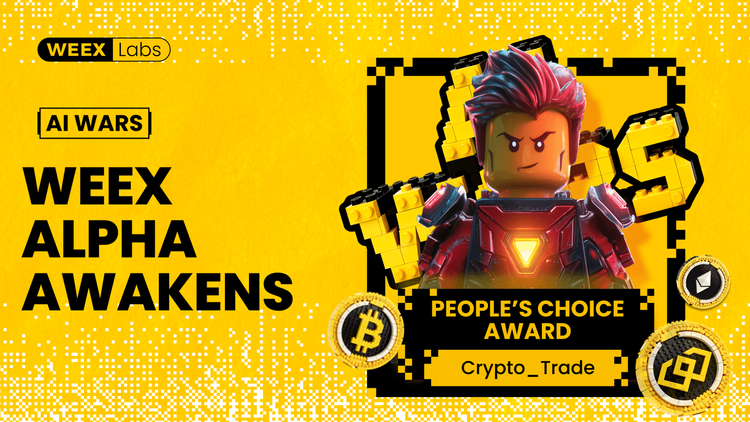
How a Structured AI Crypto Trading Bot Won at the WEEX Hackathon
Crypto_Trade shows how structured inputs and controlled adaptability can build a more stable and reliable AI crypto trading bot within the WEEX AI Trading Hackathon, highlighting a practical path toward scalable AI trading systems.

AI Starts to Devour the Manufacturing Industry | Rewire News Morning Edition
When Bezos starts using AI to buy factories instead of building data centers, it shows that he believes the next wave of AI's value is not inside the box.
When Scaling Meets Speed, Ethereum Foundation Introduces "Hardness" to Safeguard the Base Layer
Hardness is a protocol-level commitment to Ethereum core properties, including censorship resistance, privacy, security, and permissionlessness.
Google, Circle, Stripe Flock Together to Let AI Spend Money: Payment Giants' Joys and Worries in 2026 Q1
The real enemy is no longer each other, but zero cost itself

$100 Billion Factory Purchase: Bezos and Middle Eastern Capital Shift AI Money from Cloud to Shop Floor
Bezos doesn't invest in a new model; he invests in a supply chain.

Xiaomi and MiniMax both unleash their ultimate moves, signaling the start of the Agent Pricing War.
No brand, no marketing, let developers vote with their feet in 8 days
The second half of stablecoins no longer belongs to the crypto circle
What Coinbase doesn't want, Mastercard is eager to buy.
Cursor "Shell" Kimi Controversy Reversed: From Copyright Infringement Allegations to Authorized Collaboration, China's Open Source Model Once Again Becomes a Global AI Foundation
Cursor was accused of being based on Kimi K2.5, which sparked controversy, and was later confirmed to be compliant through Fireworks AI due diligence.
The Real Reason Tokens Don't Sell: 90% of Crypto Projects Overlook Investor Relations
Provide an Investor Relations Best Practices Guide for Crypto Projects.
Is the income of pump.fun real, earning a million dollars a day despite the market downturn?
If it can really earn this much, what is the reason for the low price of $PUMP?
The real reason why tokens are not selling: 90% of crypto projects neglect investor relations
Investor Relations Practice Guide for Cryptocurrency Projects.
Who is the true winner of the "Tokenization" narrative?
Virtually everyone benefits, but the reason for the benefit, the timing, and the underlying logic are completely different.


 App
App