
- Buy Crypto
- Markets
 Futures
- Spot
- Copy Trade
- Earn
- More
Ex-Cred execs plead guilty to wire fraud over $150M crypto collapse
By: bitcoin ethereum news|2025/05/15 04:30:08
0
Share
Two former executives of the bankrupt crypto lending service Cred have pleaded guilty to wire fraud connected to the company’s collapse. Former Cred CEO Daniel Schatt and chief financial officer Joseph Podulka admitted to wire fraud as part of a plea deal with prosecutors, according to a May 13 text filing in a California District Court. District Judge William Alsup accepted the plea deals and set a sentencing hearing for Aug. 26. Wire fraud can carry up to 20 years in prison and $250,000 in fines for individuals and $500,00 for businesses. Law360 reported that as part of the plea agreement, Schatt and Podulka admitted to selectively presenting positive “information [while] failing to disclose negative news” as part of a plan to “induce customers to lend their US currency and digital currencies to Cred.” Federal prosecutors have reportedly submitted a possible sentence range of up to 72 months for Schatt and up to 62 months for Podulka. Schatt and Podulka were facing 13 charges of wire fraud and money laundering. Cred customer losses exceed $150 million When Cred collapsed and filed for bankruptcy, its customers suffered losses of up to $150 million, but the US Department of Justice said in May 2024 that the assets had since climbed to a market value exceeding $783 million. In the plea agreement, the defendants agreed that their actions led to losses of between $65 million and $150 million for users. Former Cred chief commercial officer James Alexander was also hit with wire fraud and money laundering charges. Prosecutors alleged that the Cred executives misled customers about Cred’s lending and investment practices and didn’t disclose that its loan book relied heavily on the Chinese firm MoKredit, which made unsecured microloans to Chinese gamers. Cred also allegedly claimed to only engage in collateralized lending, and all its crypto investments were hedged, which prosecutors say was false. After the price of Bitcoin (BTC) dropped by 40% on March 11, 2020, Cred could not meet its margin calls and neared insolvency, and the three executives sought out new customers while downplaying the risks, prosecutors claimed. When Cred declared bankruptcy in November 2020, numerous users turned to social media to voice concerns and ask if their funds were safe. Related: Uphold exchange denies owing millions to failed crypto lender Cred Other crypto founders have also faced legal consequences this year. Alex Mashinsky, the founder and former CEO of bankrupt crypto lending platform Celsius, was sentenced to 12 years in prison for fraud on May 8. Meanwhile, Wolf Capital co-founder and head trader Travis Ford pleaded guilty on Jan. 10 to wire fraud conspiracy charges for his role in raising over $9 million from investors with false promises of high returns. Magazine: ChatGPT a ‘schizophrenia-seeking missile,’ AI scientists prep for 50% deaths: AI Eye Source: https://cointelegraph.com/news/former-execs-crypto-lender-cred-plead-guilty-wire-fraud?utm_source=rss_feed&utm_medium=feed&utm_campaign=rss_partner_inbound
You may also like

Particle Founder: The entrepreneurial insights I have gained the most from in the past year
Stop lean startup, stop lightning entrepreneurship, and think carefully about what your product aspirations are.

Huang Renxun's latest podcast transcript: The future of Nvidia, the development of embodied intelligence and agents, the explosion of inference demand, and the public relations crisis of artificial intelligence
The competition in the future is not just about whose model is larger or whose computing power is stronger, but also about who understands the industry better, who can embed AI more deeply into real processes, and who can organize these capabilities into a runnable and scalable system.

OKX Ventures Research Report: AI Agent Economic Infrastructure Research Report (Part 1)
The existing infrastructure is hostile to the Agent economy. Agents can think and act independently at the "capability level," but at the "economic level," they are still locked into infrastructure designed for humans.

The migration of settlement rights: B18 and the institutional starting point of on-chain banks
In the traditional system, banks decide the settlement; in the on-chain system, code begins to take over this responsibility.

From Tencent and Circle: Looking at the Simple and Difficult Questions of Investment
The AI narrative continues to ferment, but the recent performance of related stocks varies, with some in the midst of summer and others as if in winter.

The second half of stablecoins no longer belongs to the crypto circle
What Coinbase doesn't want, Mastercard is eager to buy.

Cursor "Shell" Kimi Controversy Reversed: From Copyright Infringement Allegations to Authorized Collaboration, China's Open Source Model Once Again Becomes a Global AI Foundation
Cursor was accused of being based on Kimi K2.5, which sparked controversy, and was later confirmed to be compliant through Fireworks AI due diligence.

The Real Reason Tokens Don't Sell: 90% of Crypto Projects Overlook Investor Relations
Provide an Investor Relations Best Practices Guide for Crypto Projects.

Is the income of pump.fun real, earning a million dollars a day despite the market downturn?
If it can really earn this much, what is the reason for the low price of $PUMP?

The real reason why tokens are not selling: 90% of crypto projects neglect investor relations
Investor Relations Practice Guide for Cryptocurrency Projects.

Who is the true winner of the "Tokenization" narrative?
Virtually everyone benefits, but the reason for the benefit, the timing, and the underlying logic are completely different.

Moss: The Era of AI-Traded by Anyone | Project Introduction
AI Trading Agent is rapidly growing its infrastructure.

Chip Smuggling Case Exposes Regulatory Loophole | Rewire News Evening Update
AI chips have become a strategic asset more sensitive than missiles

How a Structured AI Crypto Trading Bot Won at the WEEX Hackathon
Ritmex demonstrates how disciplined risk control and structured signals can make an AI crypto trading bot more stable and reliable on WEEX, highlighting the importance of combining execution discipline with scalable AI trading systems.

Old Indicator Fails, Three Major New Signals Emerge: BTC True Bottom May Still Be Below $60K
When the grocery shopping auntie on the subway, or Tony the hairdresser, start asking you about BTC, crypto, and cryptocurrency investments, selling immediately will be the only best option.

Meeting OpenClaw Founder at a Hackathon: What Else Can Lobsters Do?
Imperial College London MetaGame: AI Agent × Web3 Landing Three Major Directions.
Huang Renxun's Latest Podcast Transcript: NVIDIA's Future, Embodied Intelligence and Agent Development, Soaring Demand for Inferencing, and AI's PR Crisis
The future of competition is not only about whose model is bigger, whose computing power is stronger, but also about who understands the industry better, who can more deeply integrate AI into real processes, and who can organize these capabilities into a set of executable, scalable systems
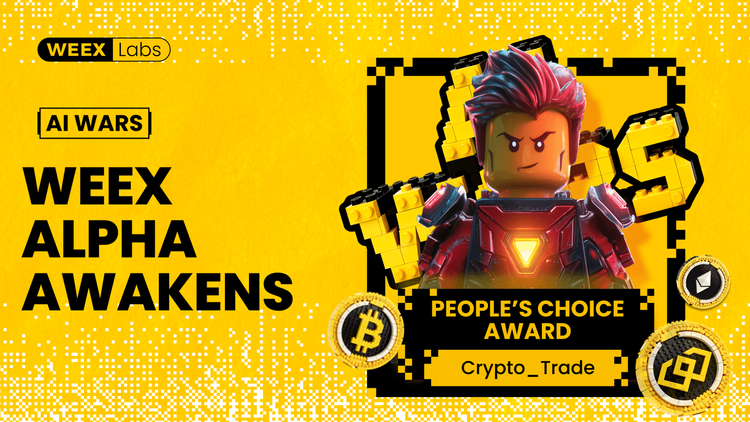
How a Structured AI Crypto Trading Bot Won at the WEEX Hackathon
Crypto_Trade shows how structured inputs and controlled adaptability can build a more stable and reliable AI crypto trading bot within the WEEX AI Trading Hackathon, highlighting a practical path toward scalable AI trading systems.
Particle Founder: The entrepreneurial insights I have gained the most from in the past year
Stop lean startup, stop lightning entrepreneurship, and think carefully about what your product aspirations are.
Huang Renxun's latest podcast transcript: The future of Nvidia, the development of embodied intelligence and agents, the explosion of inference demand, and the public relations crisis of artificial intelligence
The competition in the future is not just about whose model is larger or whose computing power is stronger, but also about who understands the industry better, who can embed AI more deeply into real processes, and who can organize these capabilities into a runnable and scalable system.
OKX Ventures Research Report: AI Agent Economic Infrastructure Research Report (Part 1)
The existing infrastructure is hostile to the Agent economy. Agents can think and act independently at the "capability level," but at the "economic level," they are still locked into infrastructure designed for humans.
The migration of settlement rights: B18 and the institutional starting point of on-chain banks
In the traditional system, banks decide the settlement; in the on-chain system, code begins to take over this responsibility.
From Tencent and Circle: Looking at the Simple and Difficult Questions of Investment
The AI narrative continues to ferment, but the recent performance of related stocks varies, with some in the midst of summer and others as if in winter.
The second half of stablecoins no longer belongs to the crypto circle
What Coinbase doesn't want, Mastercard is eager to buy.


 App
App