
- Buy Crypto
- Markets
 Futures
- Spot
- Copy Trade
- Earn
- More
Increased Market Volatility, Why Bitcoin Still Has a Chance to Reach $200,000 in Q4?

Original Title: "2025 Q4 Bitcoin Valuation Report"
Original Author: Tiger Research
Key Points
· Institutional Investors Continuously Accumulating Amidst Volatility — Net inflows into ETFs remained stable in Q3, with MSTR acquiring 388 BTC in a single month, showcasing a strong belief in long-term investment;
· Overheated but Not Yet Extreme — The MVRV-Z ratio stands at 2.31, indicating elevated valuation but not at an extreme level yet. The clearing of leveraged funds has removed short-term traders, creating room for the next upward trend;
· Global Liquidity Environment Continues to Improve — Broad money supply (M2) has surpassed $96 trillion, reaching a historical high. Expectations of a Fed rate cut have been rising, with further cuts of 1-2 times expected later this year.
Institutional Investors Buying into US-China Trade Uncertainty
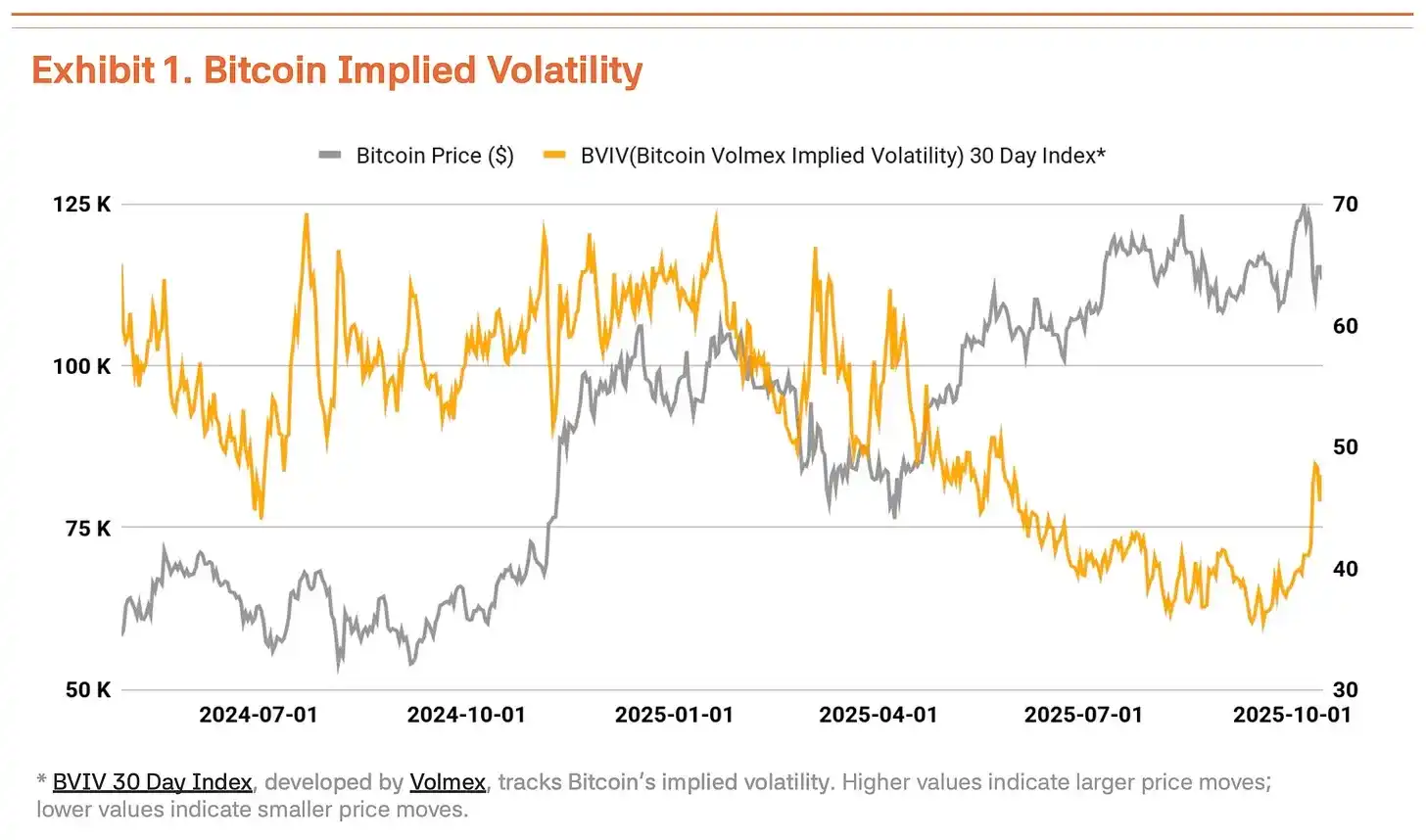
In Q3 2025, the Bitcoin market transitioned from a strong uptrend in Q2 (with a 28% increase QoQ) to a slower pace in Q3 (with a 1% increase QoQ).
On October 6, Bitcoin hit a new all-time high of $126,210. However, the Trump administration once again applied trade pressure on China, leading to a price correction of 18% to $104,000, significantly increasing volatility. According to Volmex Finance's Bitcoin Volatility Index (BVIV), institutional investors continued to accumulate steadily, with Bitcoin's volatility narrowing from March to September but surging by 41% after September, intensifying market uncertainty (Chart 1).
Driven by the resurgence of US-China trade friction and Trump's tough rhetoric, this correction appears to be temporary. Institutional strategic accumulation led by Strategy Inc. (MSTR) is, in fact, accelerating. The macro environment has also played a supportive role. Global broad money supply (M2) has surpassed $96 trillion, reaching a historical high, while the Fed cut interest rates by 25 basis points to 4.00%-4.25% on September 17. The Fed hinted at further rate cuts of 1-2 times this year, with a stable labor market and economic recovery creating favorable conditions for risk assets.
Institutional fund inflows remained strong. Bitcoin spot ETF net inflows in Q3 reached $7.8 billion. Although lower than the $12.4 billion in Q2, the net inflows throughout Q3 confirmed institutional investors' steady buying. This momentum continued into Q4 — with only the first week of October seeing $3.2 billion in inflows, marking a new high for weekly inflows in 2025. This indicates that institutional investors view price corrections as strategic entry opportunities. Strategy continued to buy during the market correction, acquiring 220 BTC on October 13 and 168 BTC on October 20, totaling 388 BTC within a week. This demonstrates that institutional investors firmly believe in Bitcoin's long-term value regardless of short-term fluctuations.
On-Chain Data Signals Overheating, Fundamental Unchanged
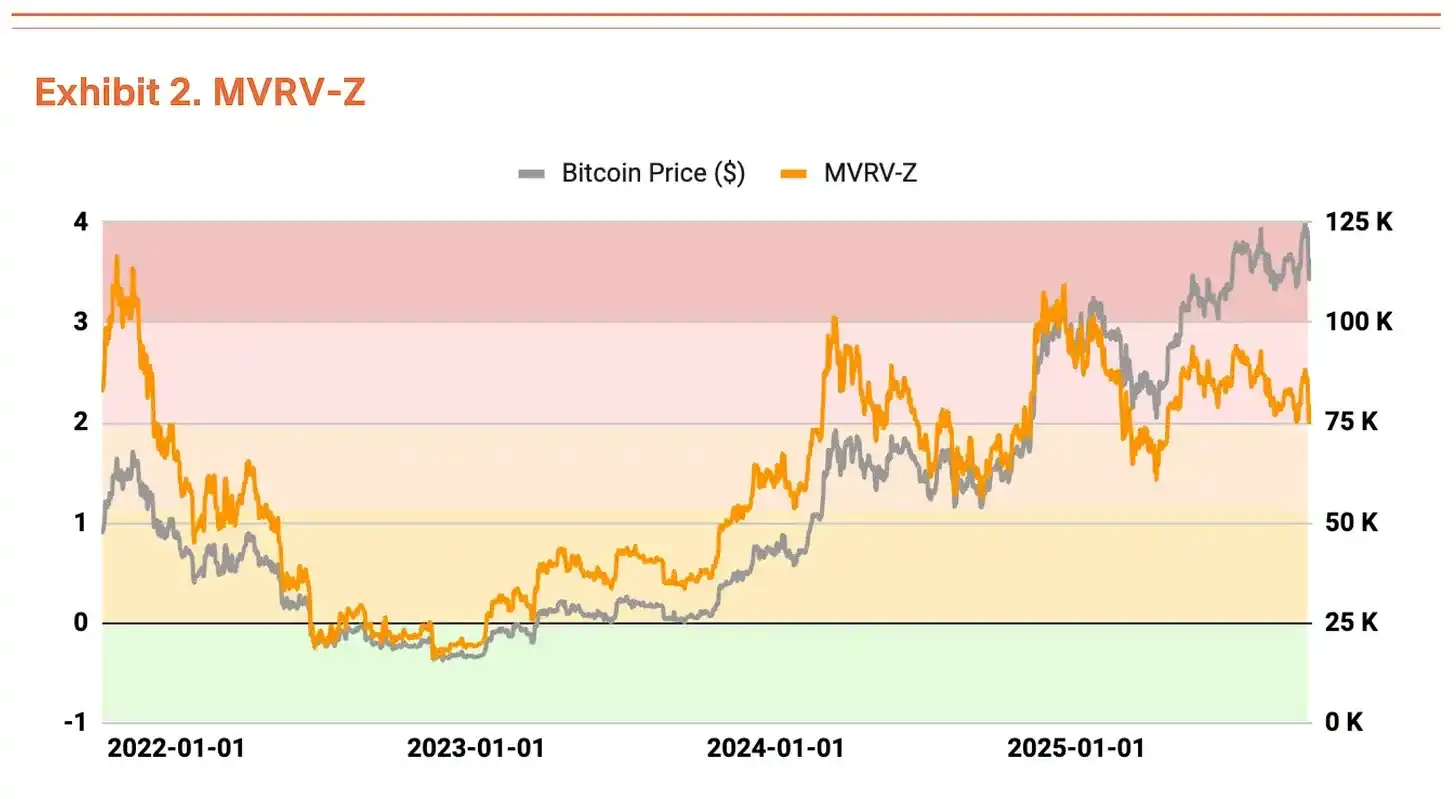
On-chain analysis has revealed some overheating signs, although the valuation is not yet concerning. The MVRV-Z ratio (Market Value to Realized Value) is currently in the overheated zone at 2.31, but it has stabilized compared to the extreme valuation range seen in July and August (Chart 2).
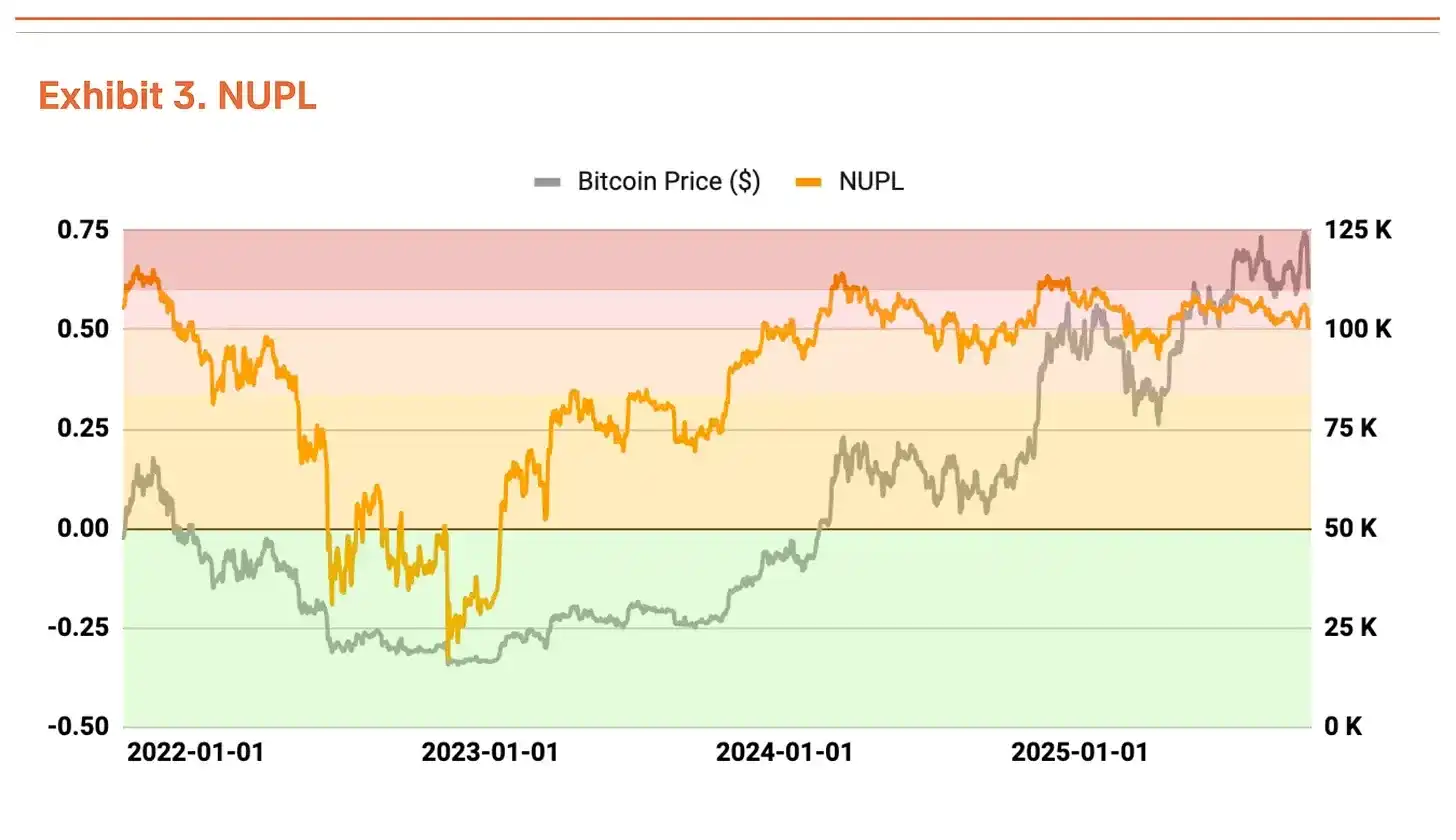
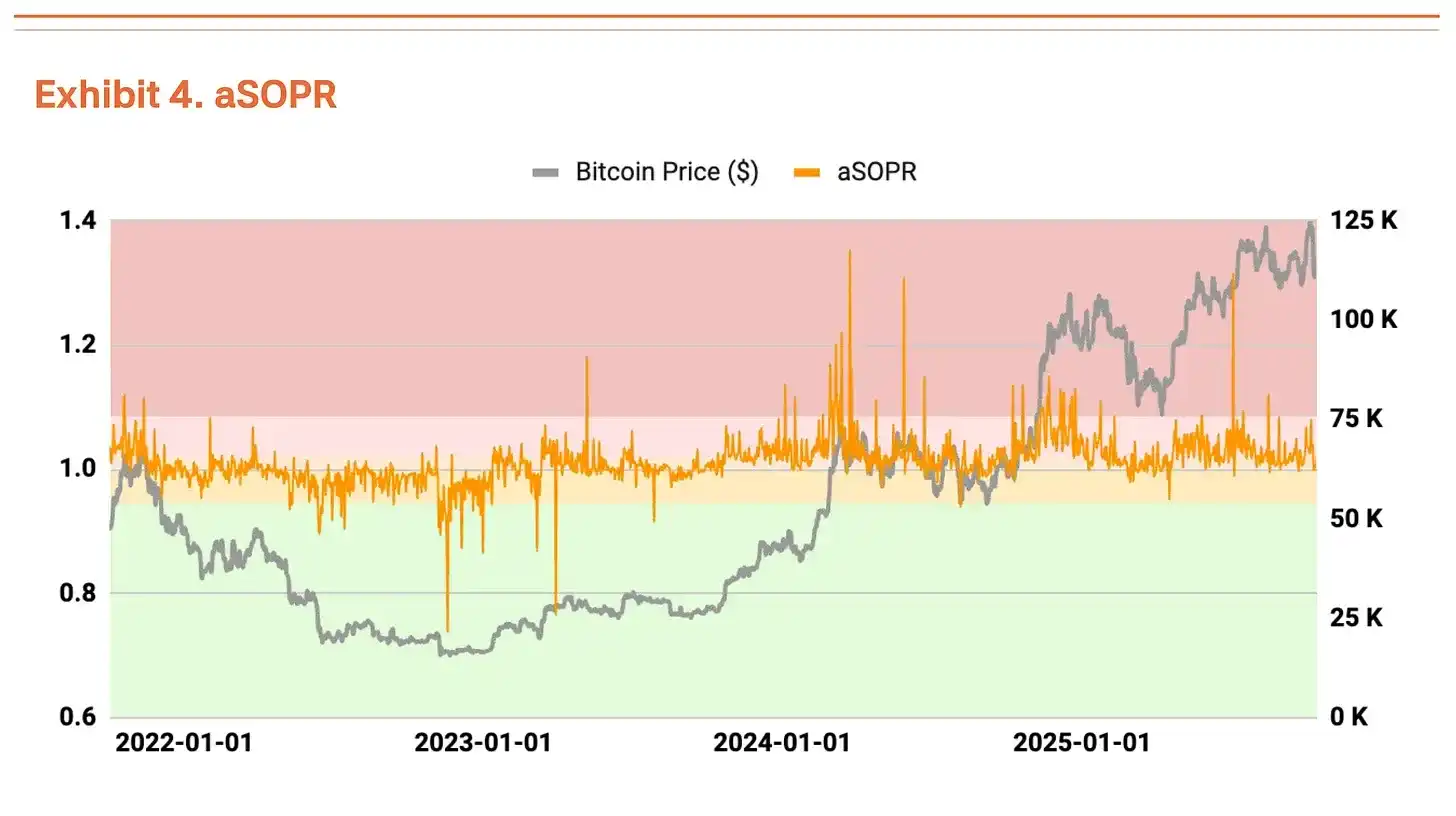
The Net Unrealized Profit/Loss Ratio (NUPL) also shows an overheated area, but it has eased compared to the high unrealized profit situation in the second quarter (Chart 3). The adjusted SOPR (aSOPR) reflects investors' realized profit/loss, with the ratio very close to the equilibrium value of 1.03, indicating no cause for concern (Chart 4).
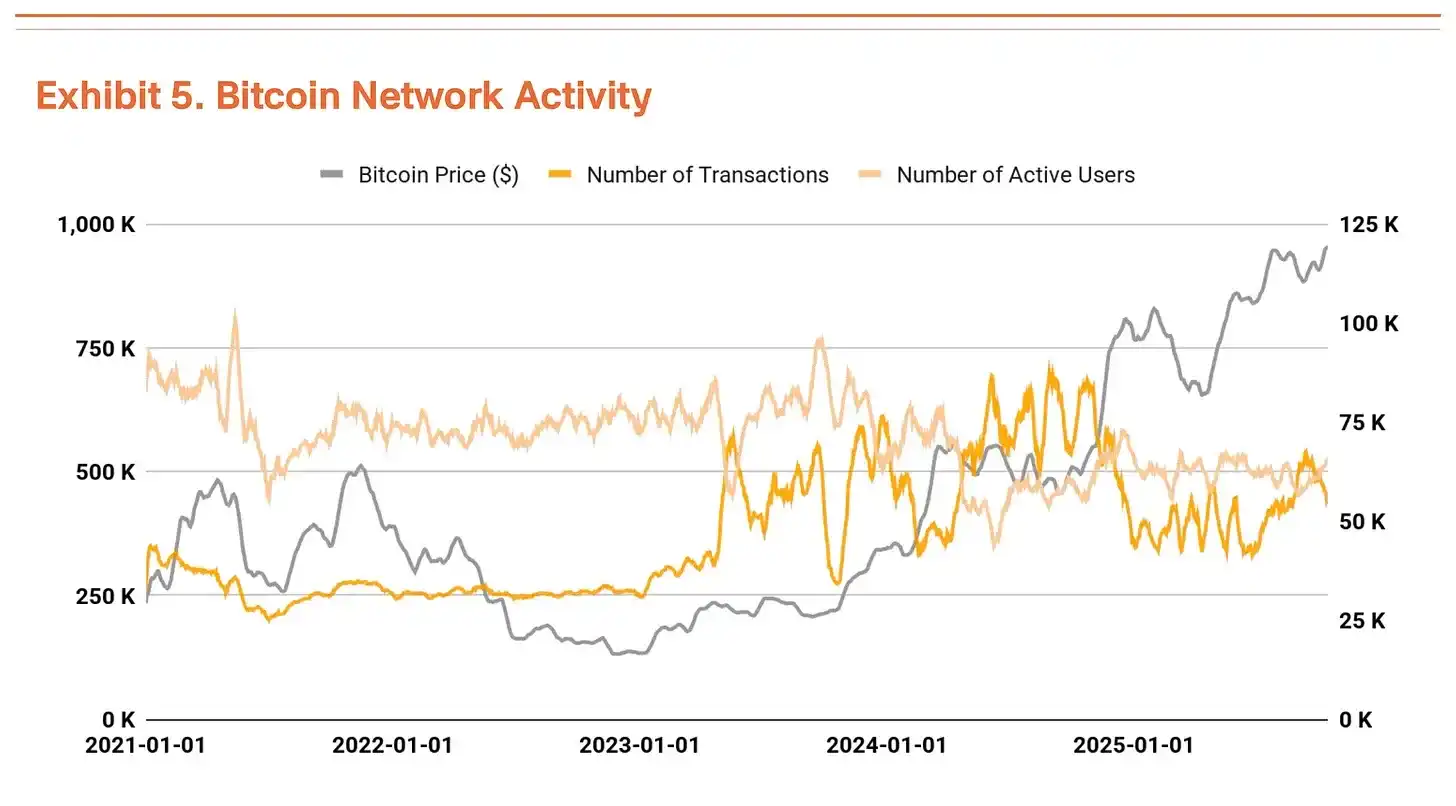
Bitcoin's transaction count and active addresses remain at similar levels to the previous quarter, indicating a temporary slowdown in network growth momentum (Chart 5). Meanwhile, total transaction volume is on the rise. A decrease in transaction count but an increase in transaction volume suggests that larger amounts of funds are being moved in fewer transactions, indicating an increase in large-scale fund flows.
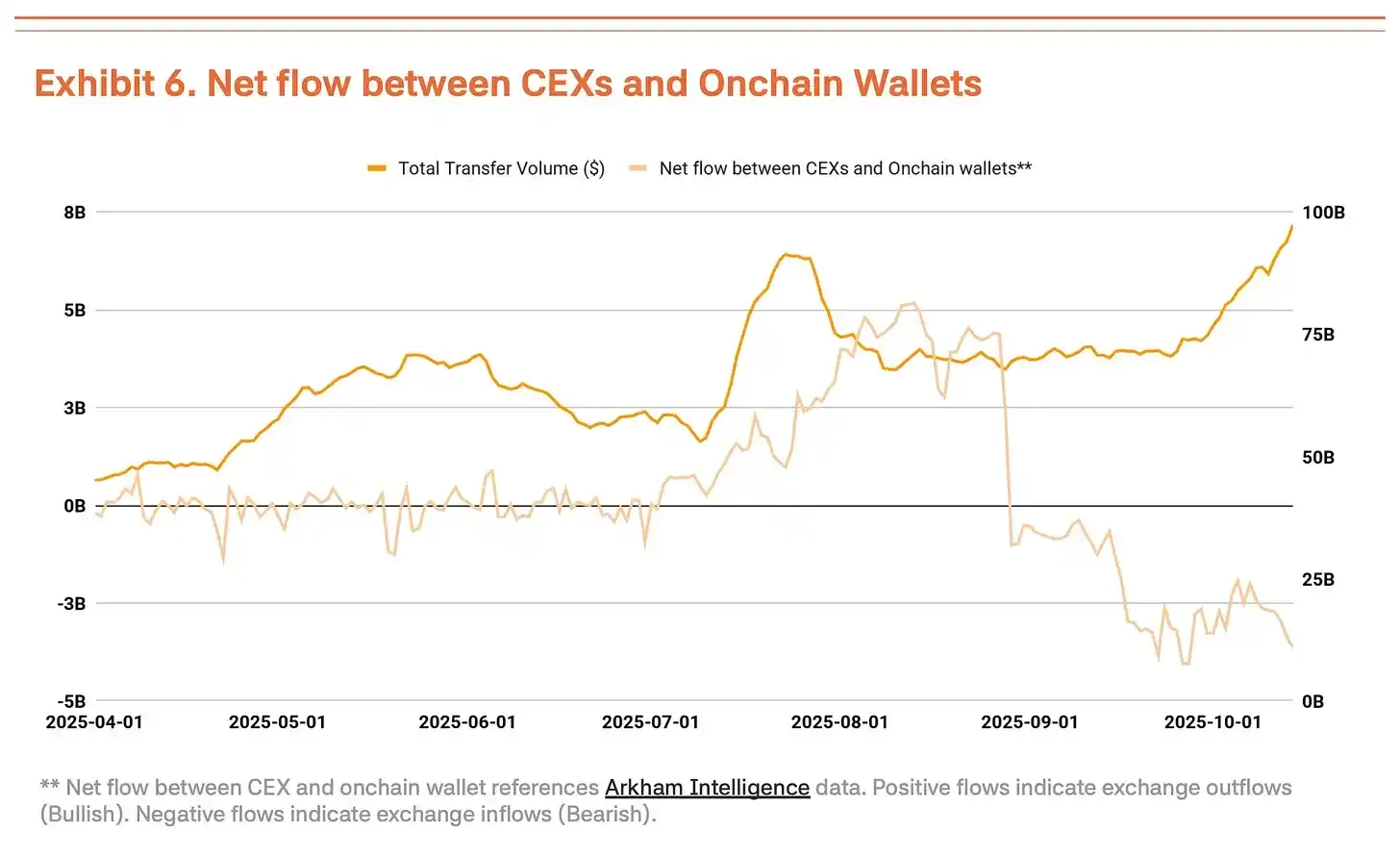
However, we cannot simply interpret the expansion of transaction volume as a positive signal. Recent inflows to centralized exchanges have increased, typically indicating holders are ready to sell (Chart 6). In a scenario where fundamental indicators like transaction count and active addresses have not improved, the increase in transaction volume more likely reflects short-term fund movement and selling pressure in a high-volatility environment, rather than an expansion of real demand.
October 11th Crash Proves Market Shift to Institution-Led
The crash on October 11th on centralized exchanges (a 14% drop) proved that the Bitcoin market has shifted from retail-led to institution-led.
The key point is that the market reaction was vastly different from before. In a similar environment at the end of 2021, market panic spread among retail-dominated markets, leading to a subsequent crash. This time, the magnitude of the pullback was limited. After large-scale liquidation, institutional investors continued to buy, indicating their firm defense of the market downside. Furthermore, institutions seem to view this as a healthy consolidation phase, helping to alleviate excessive speculative demand.
In the short term, cascading sell-offs may lower the average buy-in price for retail investors and increase psychological pressure, potentially exacerbating volatility due to dampened market sentiment. However, if institutional investors continue to enter during the consolidation period, this pullback may lay the groundwork for the next uptrend.
Price Target Raised to $200,000
Using our TVM method for third-quarter analysis, we determined a neutral benchmark price of $154,000, a 14% increase from the second quarter's $135,000. Building on this, we applied a -2% fundamental adjustment and a +35% macro adjustment, resulting in a target price of $200,000.
The -2% fundamental adjustment reflects a temporary slowdown in network activity and an increase in deposits on centralized exchanges, indicating short-term weakness. The macro adjustment remains at 35%. Global liquidity expansion and institutional inflows continue, and the Fed's dovish stance provide a strong catalyst for the fourth-quarter rally.
A short-term pullback may be driven by signs of overheating, but this is part of a healthy consolidation phase rather than a trend reversal or market perception shift. The benchmark price continues to rise, indicating a steady increase in Bitcoin's intrinsic value. Despite temporary softness, the medium to long-term upward outlook remains solid.
Disclaimer
This report has been compiled based on materials we believe to be reliable. However, we do not expressly or implicitly guarantee the accuracy, completeness, and applicability of the information. We take no responsibility for any loss arising from the use of this report or its content. The conclusions and recommendations in this report are based on information available at the time of writing and may change without prior notice. Any changes to the items, estimates, forecasts, targets, opinions, and views expressed in this report will not be separately communicated and may differ from or be contrary to the opinions of others or other organizations.
This document is for reference only and should not be construed as legal, commercial, investment, or tax advice. Any reference to securities or digital assets is for illustrative purposes only and does not constitute investment advice or an offer to provide investment advisory services. This material is not intended for investors or potential investors.
Terms of Use
Tiger Research allows for the reasonable use of its reports. The "fair use" principle broadly permits the use of specific content for purposes of public interest as long as it does not impair the commercial value of the material. When using for fair use purposes, you may use these reports without prior permission. However, when citing Tiger Research's reports, you must 1) clearly attribute the source to "Tiger Research," 2) include Tiger Research's logo. If you intend to repackage and redistribute the material, separate arrangements are required. Unauthorized use of the reports may result in legal action.
You may also like

Who's at the CFTC Table? A Rebalancing of American Fintech Discourse

AI Trading vs Human Crypto Traders: $10,000 Live Trading Battle Results in Munich, Germany (WEEX Hackathon 2026)
Discover how AI trading outperformed human traders in WEEX's live Munich showdown. Learn 3 key strategies from the battle and why AI is changing crypto trading.

Elon Musk's X Money vs. Crypto's Synthetic Dollars: Who Wins the Future of Money?
How do Synthetic Dollars work? This guide explains their strategies, benefits over traditional stablecoins like USDT, and risks every crypto trader must know.

The Israeli military is hunting a mole on Polymarket

Q4 $667M Net Loss: Coinbase Earnings Report Foreshadows Challenging 2026 for Crypto Industry?

BlackRock Buying UNI, What's the Catch?

Lost in Hong Kong

Gold Plunges Over 4%, Silver Crashes 11%, Stock Market Plummet Triggers Precious Metals Algorithmic Selling Pressure?

Coinbase and Solana make successive moves, Agent economy to become the next big narrative

Aave DAO Wins, But the Game Is Not Over
Coinbase Earnings Call, Latest Developments in Aave Tokenomics Debate, What's Trending in the Global Crypto Community Today?
ICE, the parent company of the NYSE, Goes All In: Index Futures Contracts and Sentiment Prediction Market Tool

On-Chain Options: The Crossroads of DeFi Miners and Traders

How WEEX and LALIGA Redefine Elite Performance
WEEX x LALIGA partnership: Where trading discipline meets football excellence. Discover how WEEX, official regional partner in Hong Kong & Taiwan, brings crypto and sports fans together through shared values of strategy, control, and long-term performance.

Best Crypto to Buy Now February 10 – XRP, Solana, Dogecoin
Key Takeaways XRP is set to revolutionize cross-border transactions, potentially reaching $5 by the end of Q2 with…
Kyle Samani Criticizes Hyperliquid in Explosive Post-Departure Market Commentary
Key Takeaways: Kyle Samani, former co-founder of Multicoin Capital, publicly criticizes Hyperliquid, labeling it a systemic risk. Samani’s…
Leading AI Claude Forecasts the Price of XRP, Cardano, and Ethereum by the End of 2026
Key Takeaways: XRP’s value is projected to reach $8 by 2026 due to major institutional adoption. Cardano (ADA)…
Bitcoin Price Prediction: Alarming New Research Cautions Millions in BTC at Risk of ‘Quantum Freeze’ – Are You Ready?
Key Takeaways Quantum Threat to Bitcoin: The rise of quantum computing presents a unique security challenge to Bitcoin,…
Who's at the CFTC Table? A Rebalancing of American Fintech Discourse
AI Trading vs Human Crypto Traders: $10,000 Live Trading Battle Results in Munich, Germany (WEEX Hackathon 2026)
Discover how AI trading outperformed human traders in WEEX's live Munich showdown. Learn 3 key strategies from the battle and why AI is changing crypto trading.
Elon Musk's X Money vs. Crypto's Synthetic Dollars: Who Wins the Future of Money?
How do Synthetic Dollars work? This guide explains their strategies, benefits over traditional stablecoins like USDT, and risks every crypto trader must know.


 App
App