
 Buy Crypto
- Markets
 Futures
- Spot
- Copy Trade
- Earn
- More
Parse Noise's newly launched Beta version, how to "on-chain" this heat?


Original Article Title: "Turning Attention into Order Book: Noise Lets You 'Trade Attention' on Chain"
Original Article Author: Eric, Foresight News
On April 1, 2026, Beijing Time, the 'Attention Prediction Market' Noise launched its Beta version and officially opened trading. Users are required to pay $5 to transact on the Beta version of the DApp to prevent some malicious behaviors.
In January this year, Noise announced the completion of a $7.1 million seed round led by Paradigm, with participation from Figment Capital, Anagram, GSR, JPEG Trading. KaitoAI, the attention economy representative previously cut off by X API, also participated in the investment.
The concept of "Trading Attention" has always been to deliberately generate topics and attract attention through various means to increase the exposure and discussion of something. However, Noise quantifies attention into a number, allowing users to trade the ups and downs of this number. In Noise's own words, while a prediction market focuses on "whether something will happen," Noise focuses on "how important something is right now."
Attention Index Trading Platform
The mechanism of Noise is actually quite simple to explain: Through Noise's algorithm, a heat index of a particular event or cultural symbol is generated. Users can predict whether the heat will rise or fall in the future and take long or short positions.
There are only two things that need to be clarified: how to trade and how this index is calculated.
Perhaps due to being in the testing phase, trading on the Noise platform does not involve direct use of fiat or cryptocurrency but requires users to purchase "credits" on the platform to conduct transactions.

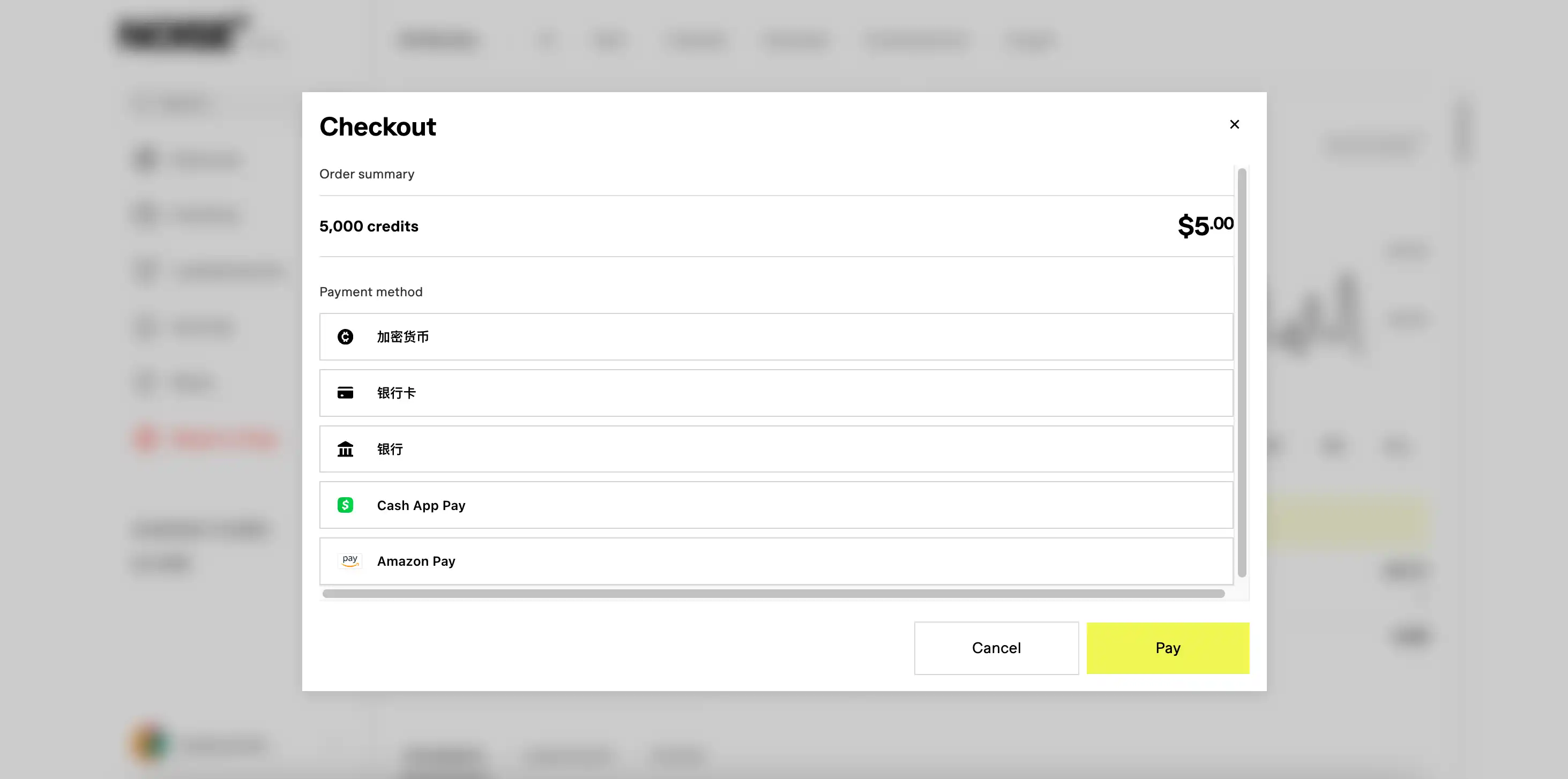
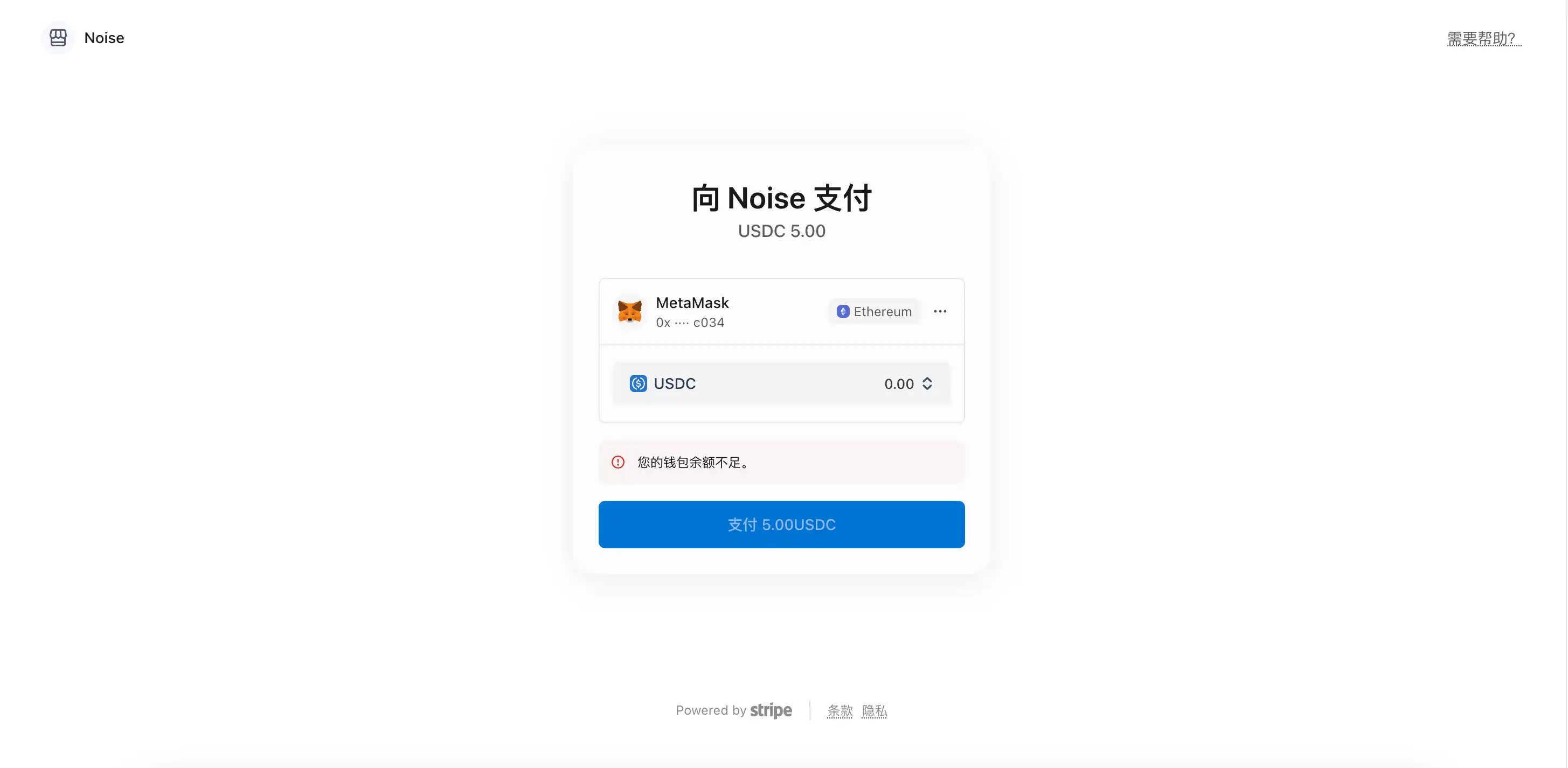
Fiat purchases are supported through bank channels, Cash App, and Amazon Pay, while cryptocurrency channels require transfers through MetaMask and Phantom, currently supporting payment in USDC on Ethereum and Solana. The author did not find an exit to exchange credits for fiat or stablecoins, possibly because the Beta version is only testing the trading engine and does not yet have settlement functionality.
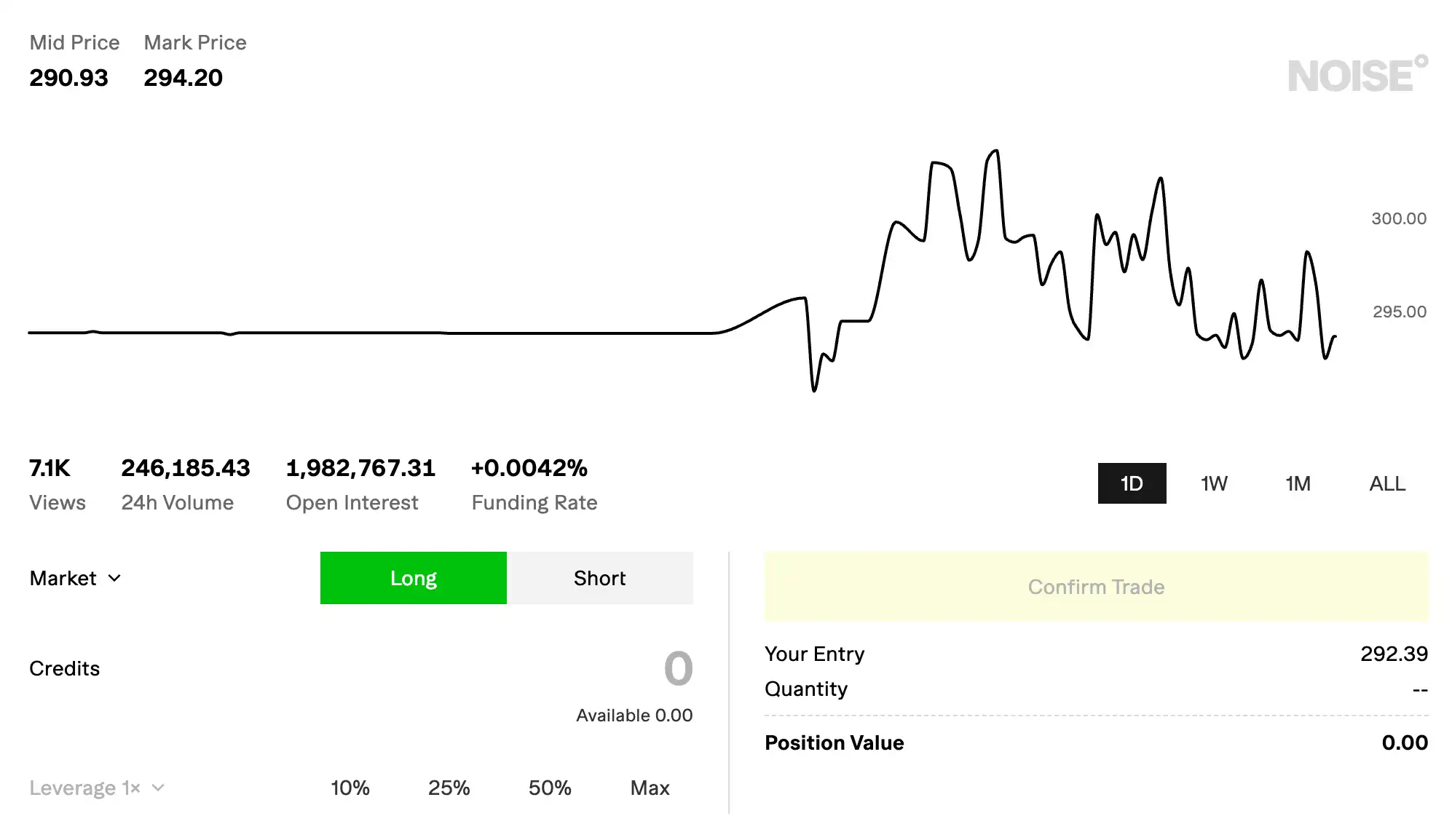
Using the recent high-interest market of "Crude Oil" as an example, you can choose leverage ranging from 1 to 5x for long or short trades. Currently, this market is one of the most popular markets in the Noise Beta version, with a 24-hour trading volume of just over 200,000 and an open interest value of around 2 million, equivalent to less than 20 million USD.
Although not displayed on the frontend, Noise also follows an order book model. Different from a prediction market, Noise's trading market is more like a cryptocurrency perpetual contract, where the oracle-provided index is the "mark price," and the market automatically adjusts the market price to the mark price through the funding rate.
As for the relevance index we are trading, Noise refers to it as the "Relevance Index," and the data calculation is based on two sources: content and signals.
On the content side, Noise tracks the interaction count, post count, and unique author count of relevant topics on platforms including X, Reddit, YouTube, Instagram, Substack, and RSS news feeds. The signals come from the volume and market count of relevant topics on Polymarket and Kalshi.
The smoothed values of all sources and metrics (to prevent short-term noise impact) are aggregated through weighting into a composite value, which is the index traded by users. However, Noise does not fully disclose the specific algorithm, most likely to prevent someone from artificially boosting the popularity of something through the algorithm's mechanics or diluting the heat of a hot topic through a large amount of irrelevant information.
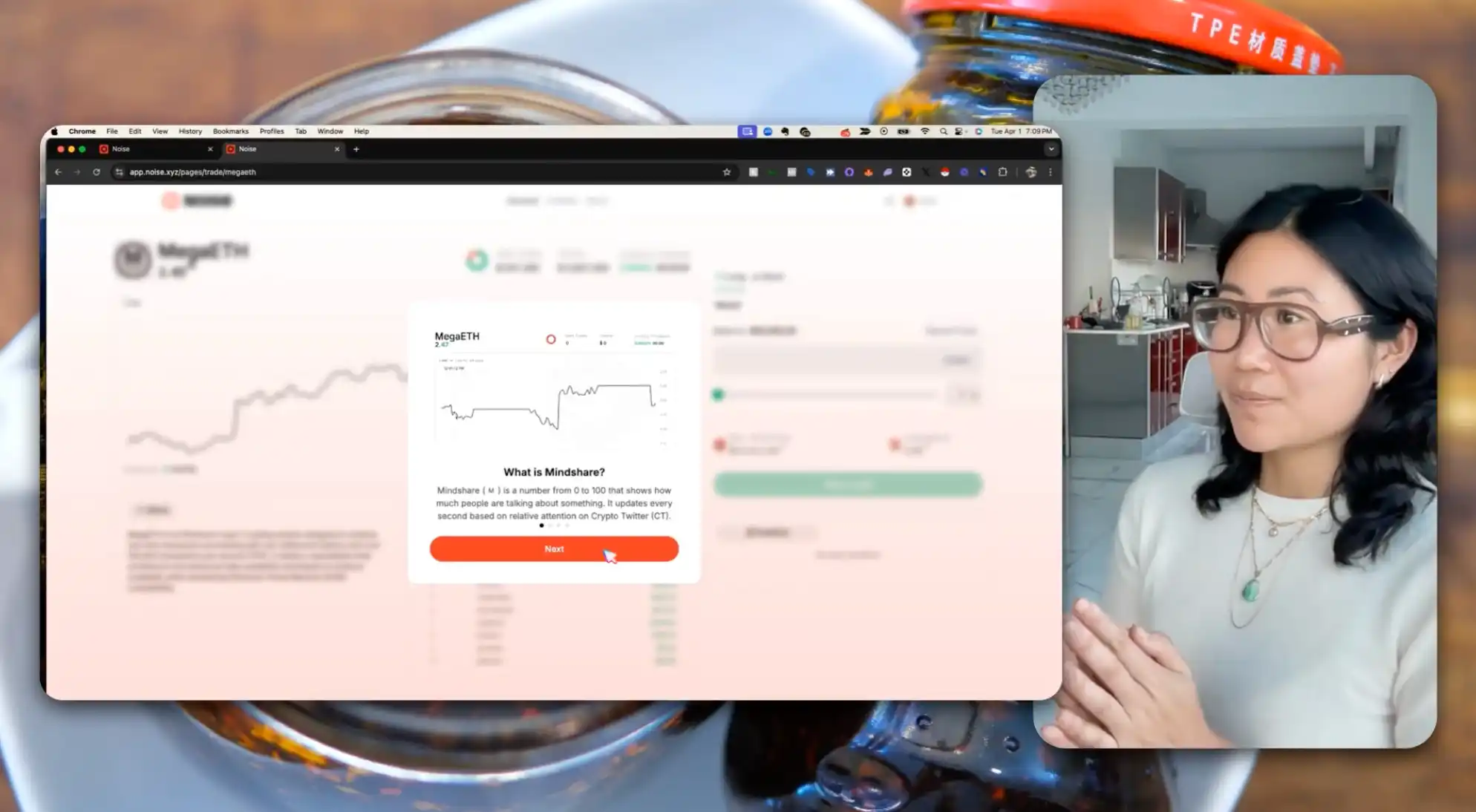
Interestingly, the author found a YouTube video of Noise's testnet experience from a year ago. In April 2025, Noise's index was still a "Mindshare" data ranging from 0 to 100, and as of Forbes' article in February this year, it still used this terminology in the coverage of the prediction market.
Recent College Graduate Founders
Noise's core founding team consists of three members, all hailing from the University of Southern California: 22-year-old Luca Cordova Stuart, 26-year-old David-Zhou, and 24-year-old Gabriel Perez Carafa.

Gabriel Perez Carafa had no prior work experience before Noise, Luca Cordova Stuart had previous BD intern experience at LayerZero Labs, and almost no public information can be found about David Zhou.
None of Noise's three co-founders have remarkable backgrounds, similar to Kalshi's early days. However, unlike Kalshi being framed as a prediction market by Forbes, these three young individuals beg to differ. In a blog post announcing the launch of the Beta version, they wrote, "You may have seen Noise compared to a prediction market, and we understand why that comparison exists, but we do not align with it. Speculation is just one of many factors, and our goal is to build a platform that helps people understand and communicate deeper stories about modern culture, lifestyle, politics, and technological shifts."
From several past articles, Noise has always aimed to convey: cut through the noise and gain real insights. While a prediction market offers the probability of something happening in cold hard cash, Noise wants to discuss "whether it's necessary for that thing to happen."
Aside from speculation, what are the use cases?
The trading market undoubtedly involves speculation; this is indisputable. The key question is what practical use cases Noise has beyond speculation.
Prior to this, Kalshi co-founder Lara shared at a conference that recently, Kalshi witnessed many multimillion-dollar orders on the inflation prediction market, with these orders originating from large corporations hedging against potential wage inflation due to a rebound. Noise also presents a similar scenario: companies can use a portion of their marketing budget to short a topic they are ready to market, thereby hedging against marketing strategy failure.
Furthermore, the concept of "heat" also has a unique application in trading cryptocurrencies, stocks, and others. Based on the market heat on Noise regarding the PUMP topic, the peak heat coincided with the high point of the rebound after the first dip of the PUMP. For investors who believe in "buying when there's blood in the streets and selling when there's euphoria," Noise's related markets may serve as a good reference and hedging channel.
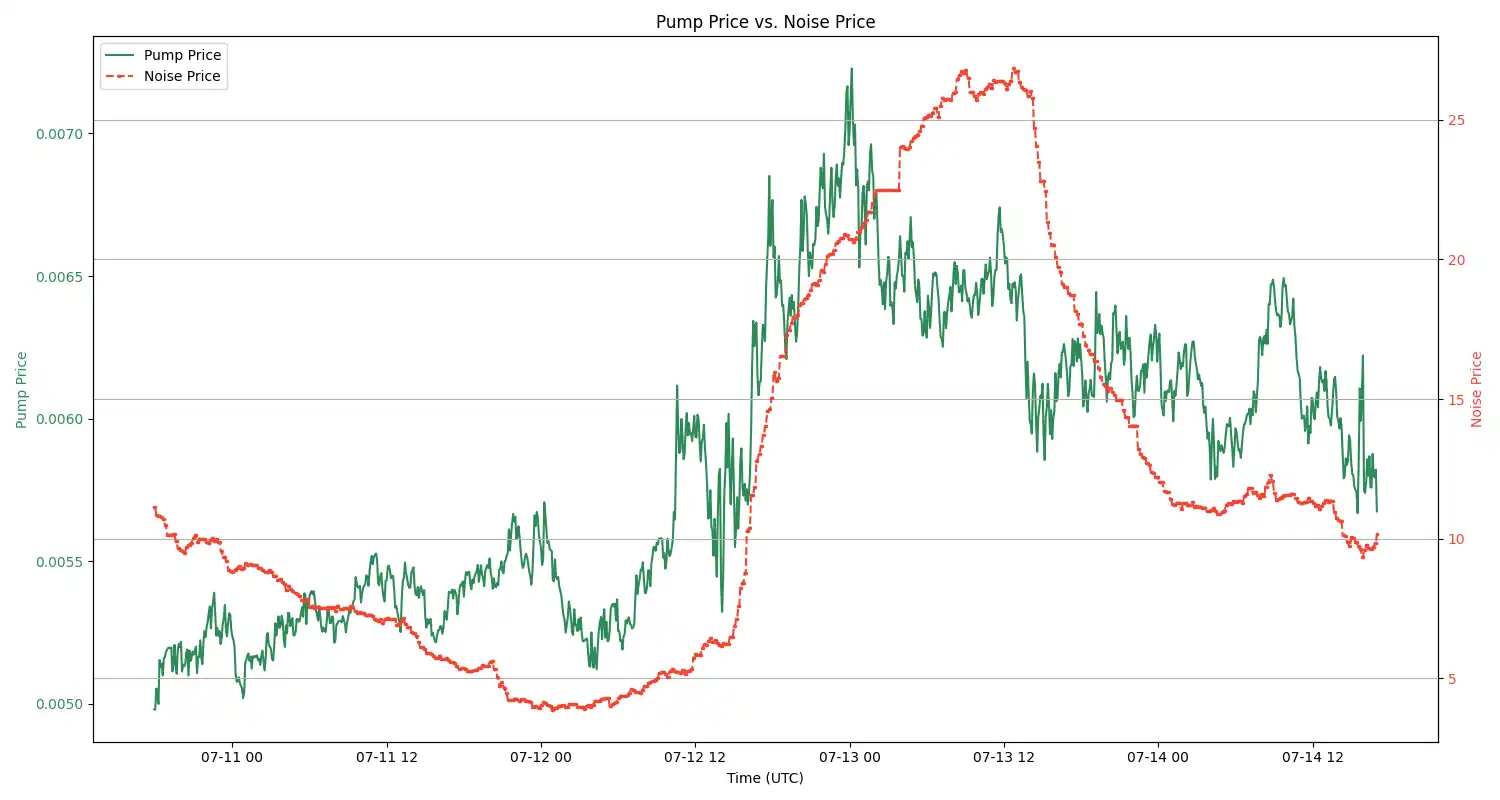
Noise plans to launch its mainnet on Base in the coming months, at which point the platform will be open to everyone and support real-money trading. From the author's perspective, Noise's concept is indeed novel and has practical use cases. However, similar to prediction markets from over a decade ago, trading "heat" and "trends" may still be somewhat ahead of their time. Nevertheless, in a market recently dominated by stablecoins and payment app surges, Noise may be a target for airdrop hunting.
You may also like

How to Earn Free USDT in 2026: No High Volume Required (WEEX Poker Party Guide)
Is Joker Crypto legit in 2026 or just another memecoin? Can You Really Earn Passive Income with Joker Crypto in 2026? Learn how Joker staking rewards work, how to earn NFT bonuses, expected APY ranges, gas-fee rebates, and how to avoid crypto scams before joining.

How to Get Free USDT Welcome Bonus in 2026: Earn Up to 700 USDT on WEEX
Legit Free Welcome Bonus 2026: Learn how to earn up to 700 USDT on WEEX with Auto Earn Boost Fest. Increase your balance, activate Auto Earn, and qualify automatically.

AI Agent Payments Just Got Real: Utexo × x402 Brings 50ms USDT Transactions to Internet Scale
Utexo integrates USDT into the x402 protocol, enabling 50ms instant payments embedded natively in HTTP requests. Explore how this breakthrough is rewriting the rules for AI agent payments, API monetization, and the machine-to-machine economy.

DWF Deep Report: AI in DeFi Outperforms Humans in Yield Optimization, but Complex Trades Still Lag Behind by 5 Times

What Separates Smart Money from the Crowd in Crypto? Insights from Freedom of Money
Most crypto traders lose money not because of bad luck, but because they misunderstand how the market really works. From Freedom of Money to the rise and fall of Sam Bankman-Fried, they highlight a key divide in crypto: those who build the market and those who chase it. This reading guide explores essential books that reveal how narrative, regulation, capital, and psychology shape long-term success in the crypto industry.

The Risk Management Core Team has just been ousted, and Aave is now facing a $200 million default.

The $293 million bug wasn't in the code; so, what's the deal with the "DVN Configuration Bug," which led to the largest hack of 2026?

a16z on Recruitment: How to Choose Between Crypto-Native and Traditional Talent?

The biggest DeFi heist of 2026, hackers easily took advantage of Aave

Will Robots Replace Humans? He Says No!

Binance Coin's Price Skyrockets 15x to All-Time High, Saved by Three Bull Market Lifelines

The organization has accessed the prediction market, but is stuck at the third stage

Head of crypto VC collective shrinks: a16z crypto fund management scale plummets by 40%, Multicoin cut in half

Arthur Hayes New Post: It's "No Trade" Time Now
Claude Opus 4.7 Review: Is It Worthy of the Title of Strongest Model?

DWF In-Depth Report: AI Outperforms Humans in Yield Farming Optimization in DeFi, But Complex Transactions Still Lag Behind 5x
The financial tricks of the crypto giant Kraken

When proactive market makers start to take initiative
How to Earn Free USDT in 2026: No High Volume Required (WEEX Poker Party Guide)
Is Joker Crypto legit in 2026 or just another memecoin? Can You Really Earn Passive Income with Joker Crypto in 2026? Learn how Joker staking rewards work, how to earn NFT bonuses, expected APY ranges, gas-fee rebates, and how to avoid crypto scams before joining.
How to Get Free USDT Welcome Bonus in 2026: Earn Up to 700 USDT on WEEX
Legit Free Welcome Bonus 2026: Learn how to earn up to 700 USDT on WEEX with Auto Earn Boost Fest. Increase your balance, activate Auto Earn, and qualify automatically.
AI Agent Payments Just Got Real: Utexo × x402 Brings 50ms USDT Transactions to Internet Scale
Utexo integrates USDT into the x402 protocol, enabling 50ms instant payments embedded natively in HTTP requests. Explore how this breakthrough is rewriting the rules for AI agent payments, API monetization, and the machine-to-machine economy.
DWF Deep Report: AI in DeFi Outperforms Humans in Yield Optimization, but Complex Trades Still Lag Behind by 5 Times
What Separates Smart Money from the Crowd in Crypto? Insights from Freedom of Money
Most crypto traders lose money not because of bad luck, but because they misunderstand how the market really works. From Freedom of Money to the rise and fall of Sam Bankman-Fried, they highlight a key divide in crypto: those who build the market and those who chase it. This reading guide explores essential books that reveal how narrative, regulation, capital, and psychology shape long-term success in the crypto industry.



 App
App