
- Buy Crypto
- Markets
 Futures
- Spot
- Copy Trade
- Earn
- More
Reimagining Consolidation: Top Coin Experiencing Whale Supply Redistribution

Original Title: The Great Rotation: BTC won. What Happens to ETH, Sol, and Alts?
Original Author: Ignas, DeFi Researcher
Original Translation: CryptoLeo, Odaily Planet Daily
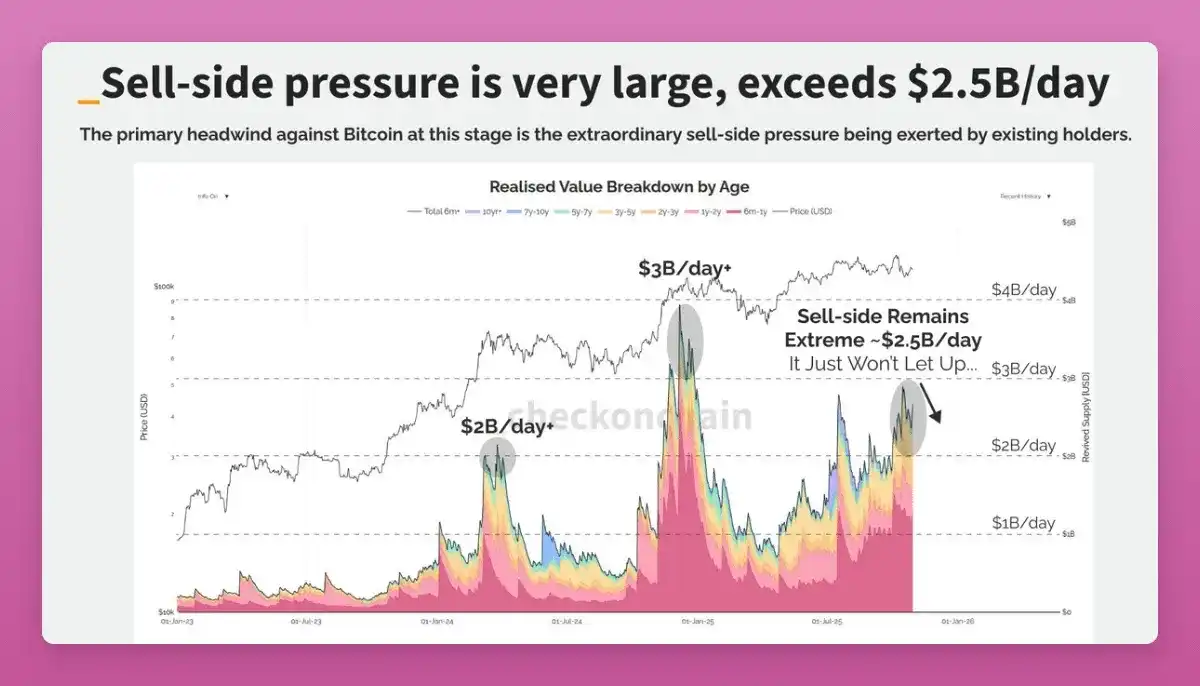
Ignas put forward a point of view that, despite the approval of a BTC ETF, accelerated adoption by institutional investors, the passage of the "Genius Act," the upcoming "Clarity Act," no regulatory crackdown, no major hack, and no fundamental narrative collapse, BTC is still trading sideways with insufficient liquidity. At this moment, early BTC investors are strategically starting to cash out (rather than sell off), while new investors are planning to buy the dip.
Key Points
Early BTC believers are cashing out profits;
This is not a panic sell-off, but a natural transition from whale concentration to widespread distribution among everyone;
Among all traceable on-chain metrics, the most obvious signal is whale selling.
Let's Start with BTC
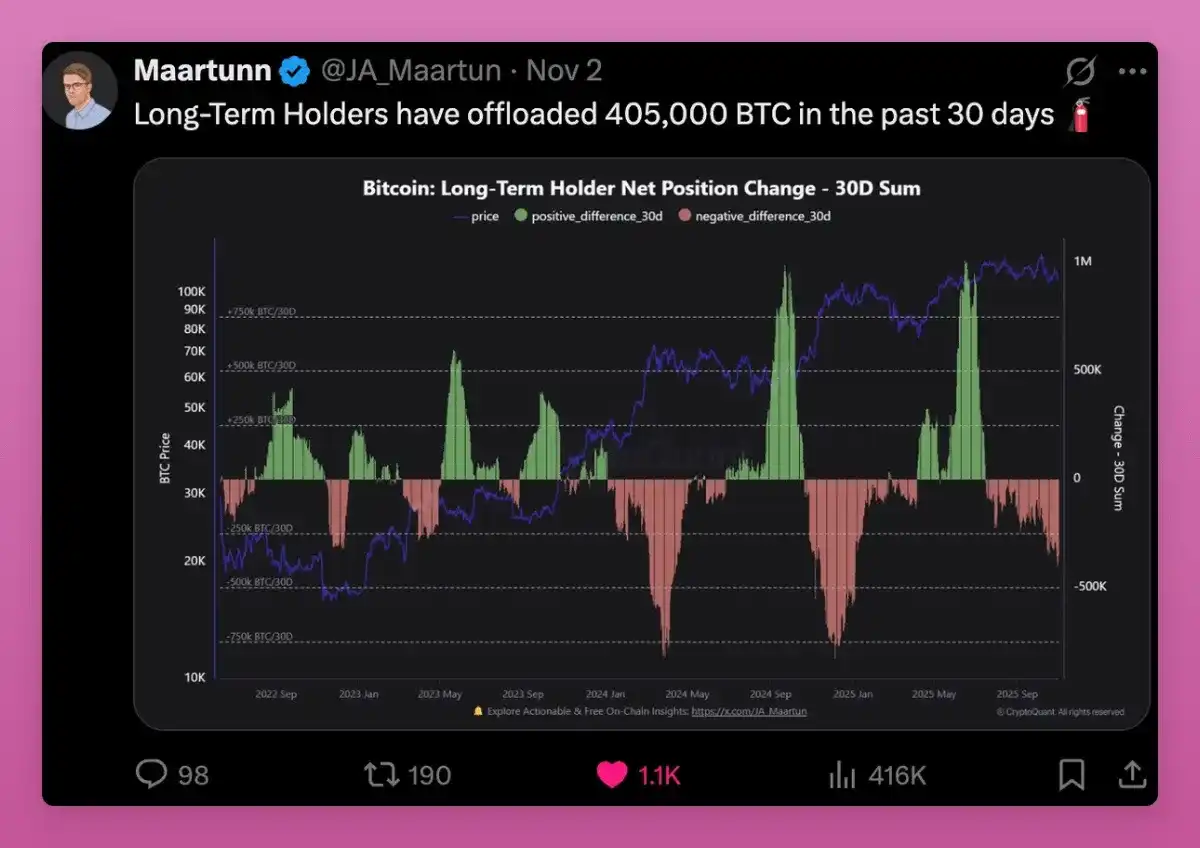
Long-term holders have sold 405,000 BTC in the last 30 days, accounting for 1.9% of the total BTC supply.
Take Owen Gunden, for example, who is one of the early BTC whales. He conducted large transactions at Mt. Gox, has a significant holding, and is a board member of LedgerX. His associated wallets hold over 11,000 BTC, making him one of the largest individual holders on-chain.
Recently, his wallets have started transferring large amounts of BTC to Kraken, moving thousands of BTC in batches. This usually indicates that he is selling. On-chain analysts believe he may be preparing to sell most of his BTC, valued at over $1 billion.
Since 2018, he has not tweeted, but this move fits with my "great turnover" theory, where some people are moving into ETFs for tax advantages or selling off for portfolio diversification (like buying ZEC?).
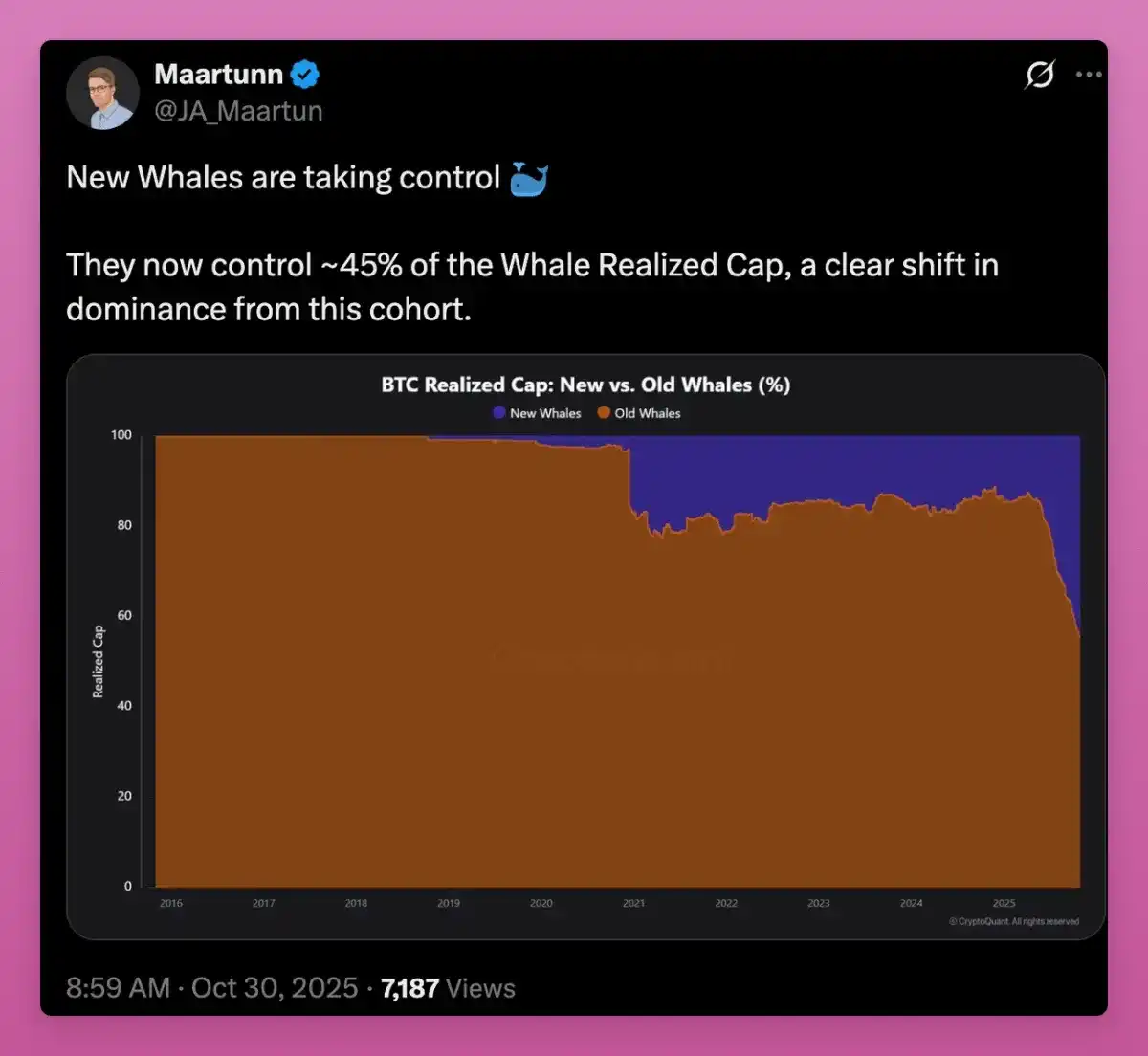
As supply shifts from early whales to new buyers, BTC's average cost price continues to rise, and new holders are now taking control.
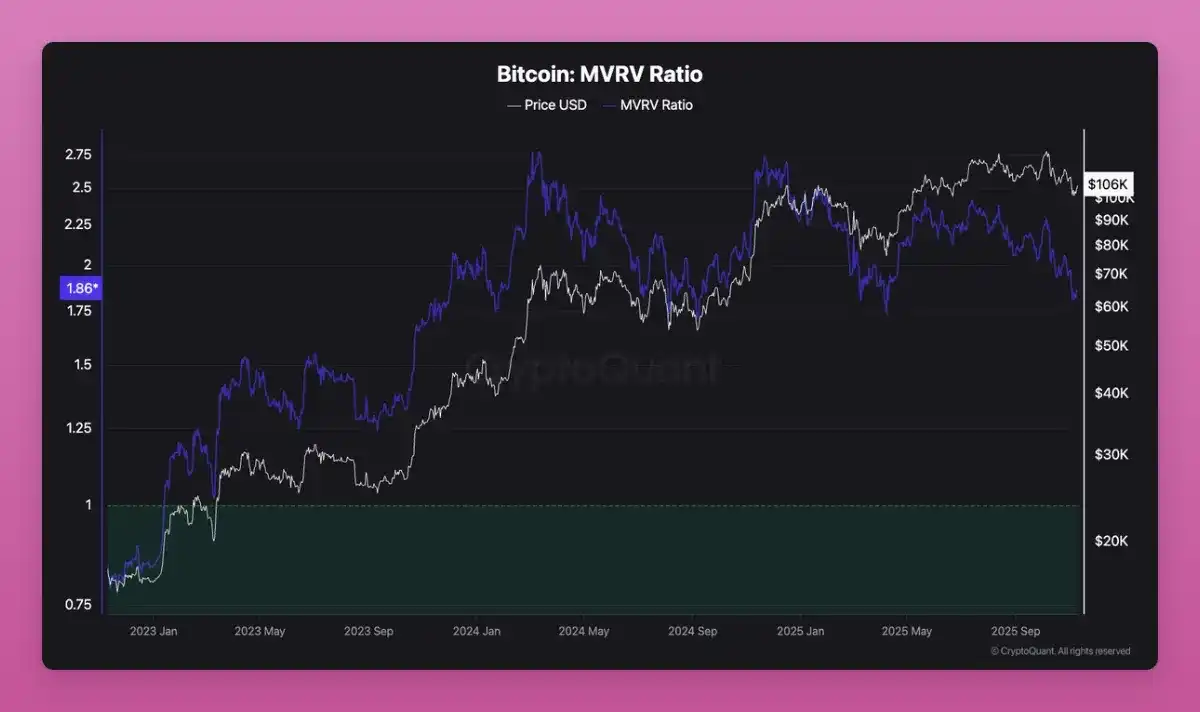
As the average cost basis shifts from early miners to ETF buyers and new institutions, we can see MVRV on the rise.
MVRV, which stands for "Current Price" ÷ "Holder's Base Price," is a classic on-chain Bitcoin valuation metric proposed by Murad Mahmudov and David Puell in 2018. It is now widely used to assess whether Bitcoin is overvalued (overheated) or undervalued (oversold).
Some may argue that this seems like a bearish signal, as longstanding whales have held significant profits for years while newly entered whales have been in a constant state of loss.
The BTC average cost basis is close to $110,800, and there are concerns that if BTC continues to underperform, new investors may choose to sell.
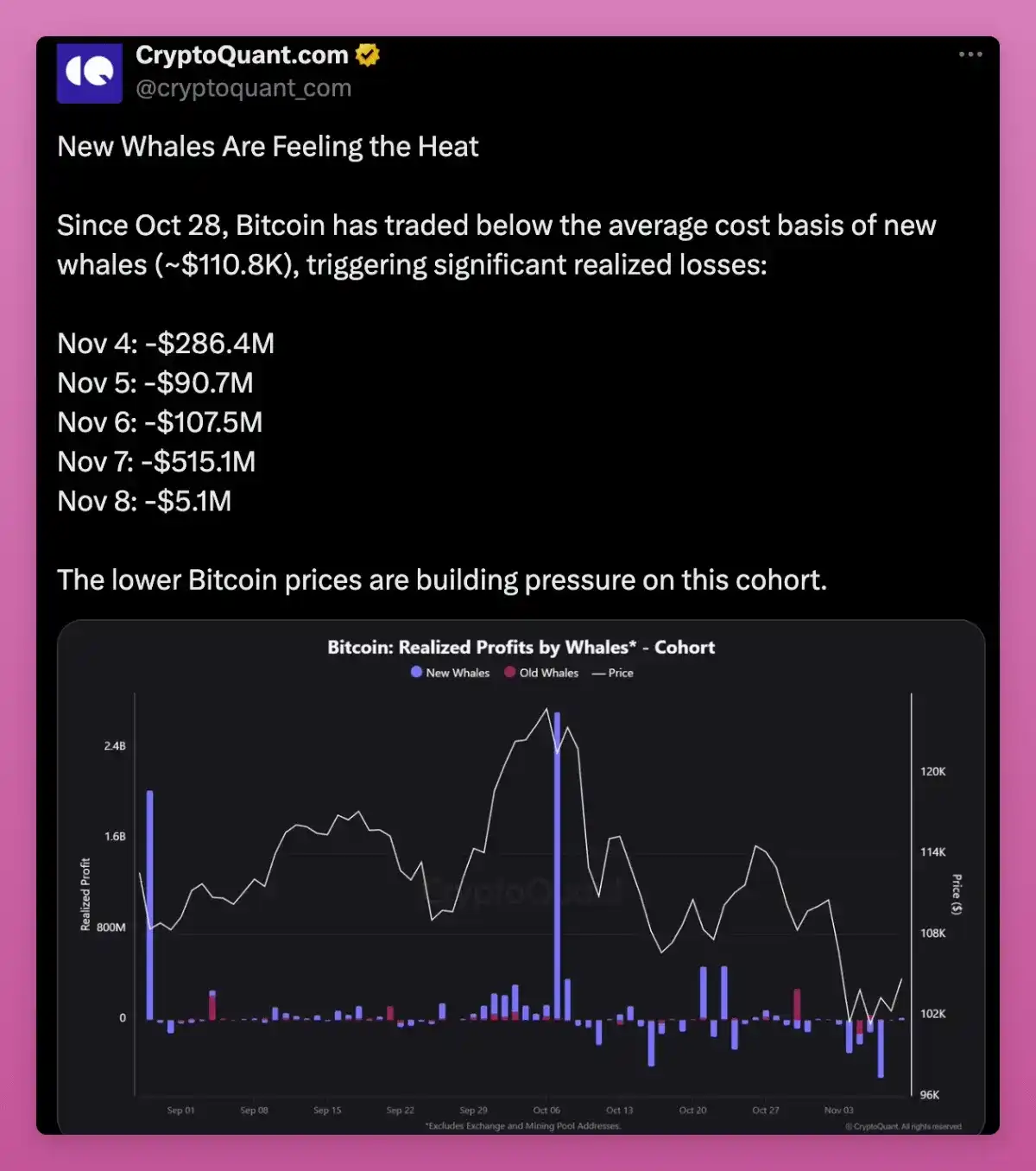
However, the rising MVRV indicates that ownership is diversifying and becoming more mature. Bitcoin is transitioning from a few ultra-low-cost holders to a more dispersed group with a higher cost basis.
This is actually a bullish signal. What about outside Bitcoin?
The Changing Hands of Ethereum Chips
And ETH? Can ETH show a similar "changing of the guard" pattern? Similar to Bitcoin, this may partially explain the lagging price of ETH.
From one perspective, ETH also seems to be winning: both have ETFs, DATs, and institutional investors, albeit of different natures.
Data shows that ETH is also in a similar transition period, just earlier in time and more convoluted in process.
In fact, from one perspective, ETH has caught up with BTC: currently, about 11% of all ETH is held by DATs and ETFs.
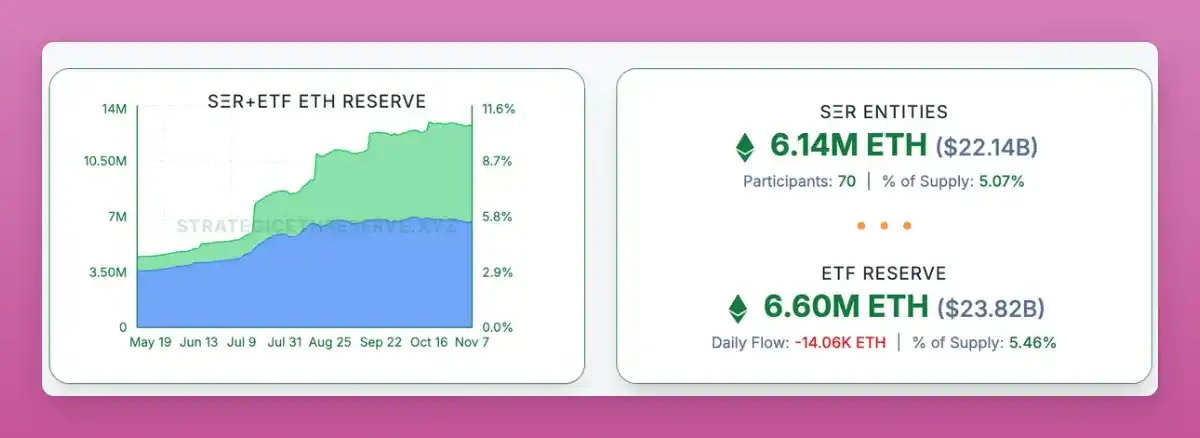
While BTC has approximately 17.8% of its share held by spot ETFs and large treasuries (thanks to Saylor's efforts over the years), ETH is following this trend.
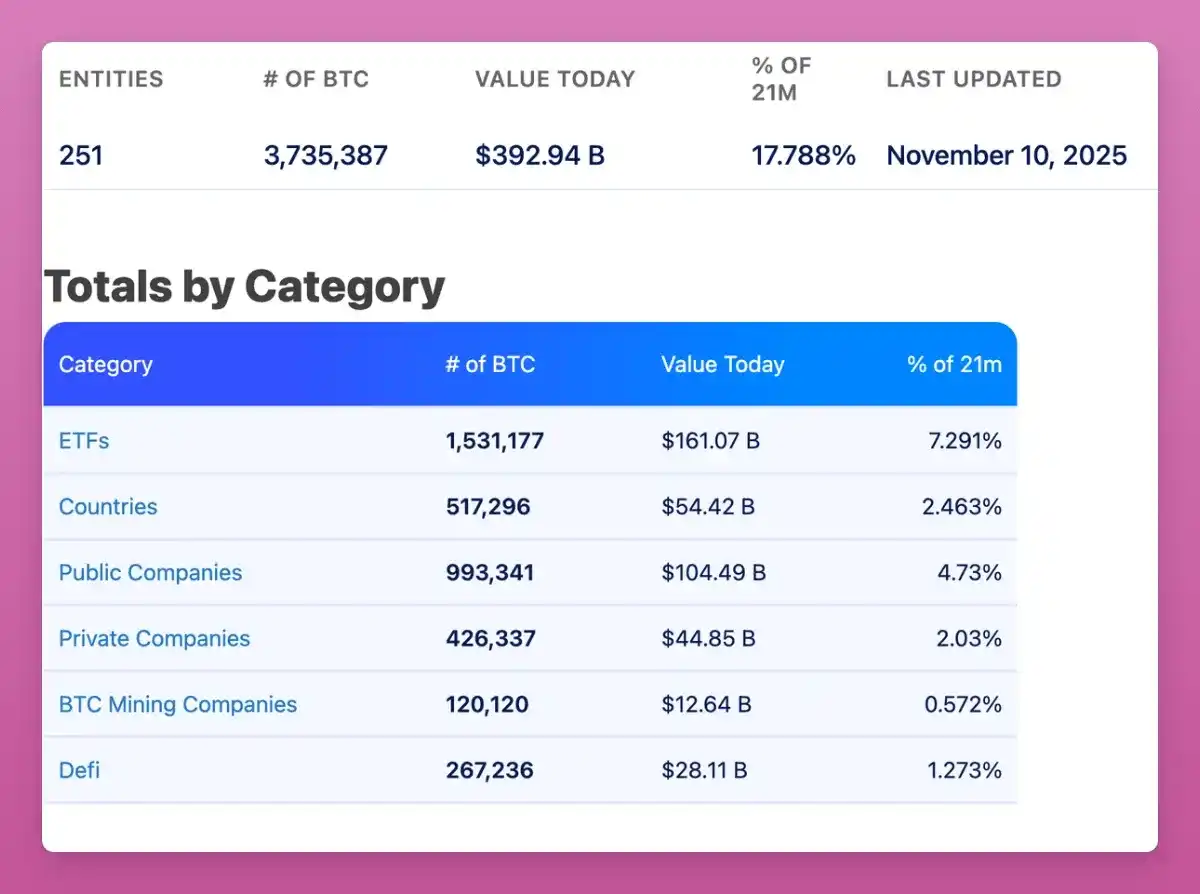
I tried to find relevant data on ETH to verify whether, like BTC, old whales are diversifying ETH to new whales, but was unsuccessful. I even reached out to Ki Young Ju from CryptoQuant, who told me that due to ETH's account-based model, which is different from BTC's UTXO model, it is challenging to quantify data.
Anyway, the main difference seems to be that ETH has shifted from retail to whale, while BTC's main shift is from old-school whale to new whale.
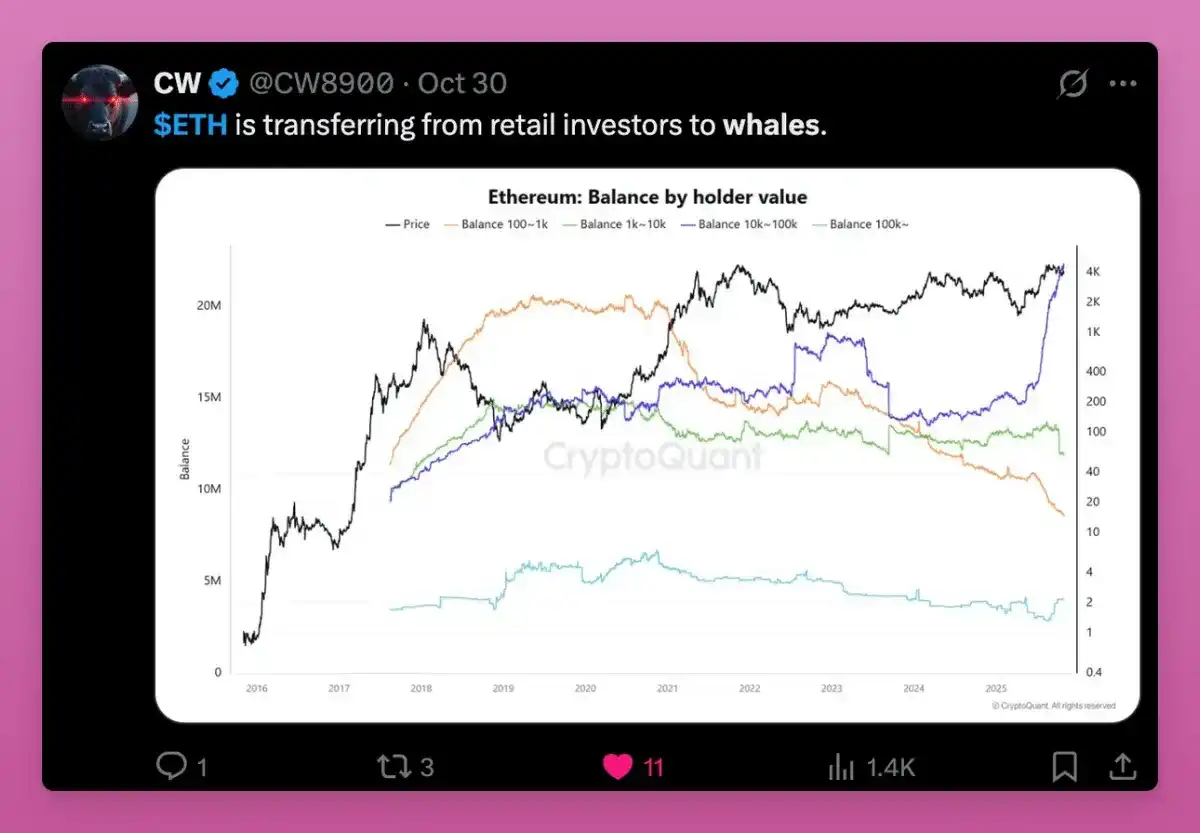
The chart below also shows the trend of ETH ownership shifting from retail to whale.
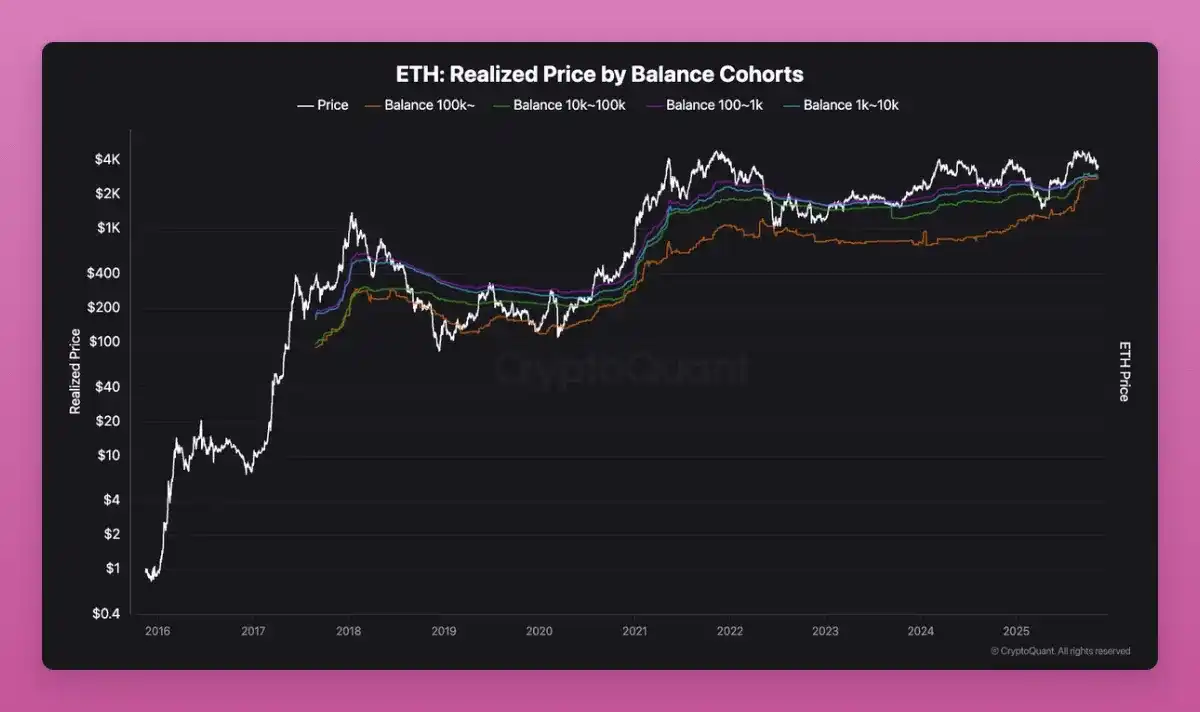
The actual price of large accounts (over 100,000 ETH) is rapidly rising, indicating that new buyers are entering at higher prices while small holders are selling off.
Notice how all lines (orange, green, purple) are converging at the same level now, indicating wallets of various fund sizes have an almost equal cost basis, suggesting old tokens have moved into the hands of new holders.
This cost basis reset should occur towards the end of the accumulation cycle and before a significant price increase. Structurally, this indicates ETH supply is consolidating into stronger hands, making the ETH market bullish.
The rationale behind this shift is:
-Retail is selling off while whales and funds are accumulating, reasons including: 1) stablecoin and tokenization adoption; 2) staking ETFs; 3) institutional investor participation;
-Retail sees ETH as "gas" and loses confidence in ETH when other L1 tokens emerge. Whale investors view it as an earning asset collateral and keep accumulating for long-term on-chain returns;
-While BTC is winning, ETH is still in a gray area, so whales are ahead, blocking institutional investor entry.
The combination of ETFs and DeFi Application Tokens (DAT) makes the ETH holder base more institutionalized, but it is unclear if they lean more towards long-term growth. The main concern is ETHZilla announcing the sale of ETH to buy back its shares. This is not a reason for panic, but it has set a precedent.
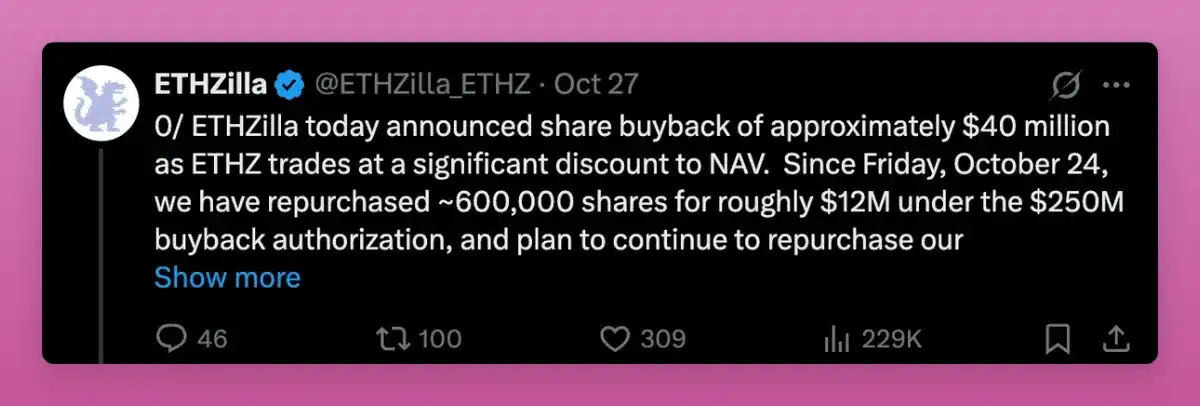
Overall, ETH also fits the "high turnover" theory. Its structure is less clear than Bitcoin's because Ethereum's holder base is more diverse, with more use cases (such as providing liquidity to a few large wallets) and more reasons for holders to move tokens on-chain.
Solana Chip Movement
It's really hard to figure out which stage SOL is in the turnover theory, even identifying institutional wallets or major holders is difficult. Nevertheless, some patterns can still be found.
SOL is entering the same institutionalized stage as ETH. Last month, a SOL spot ETF appeared on CT, with no hype. Although the inflow volume is not particularly high (totaling $3.51 billion), there is a positive inflow every day.
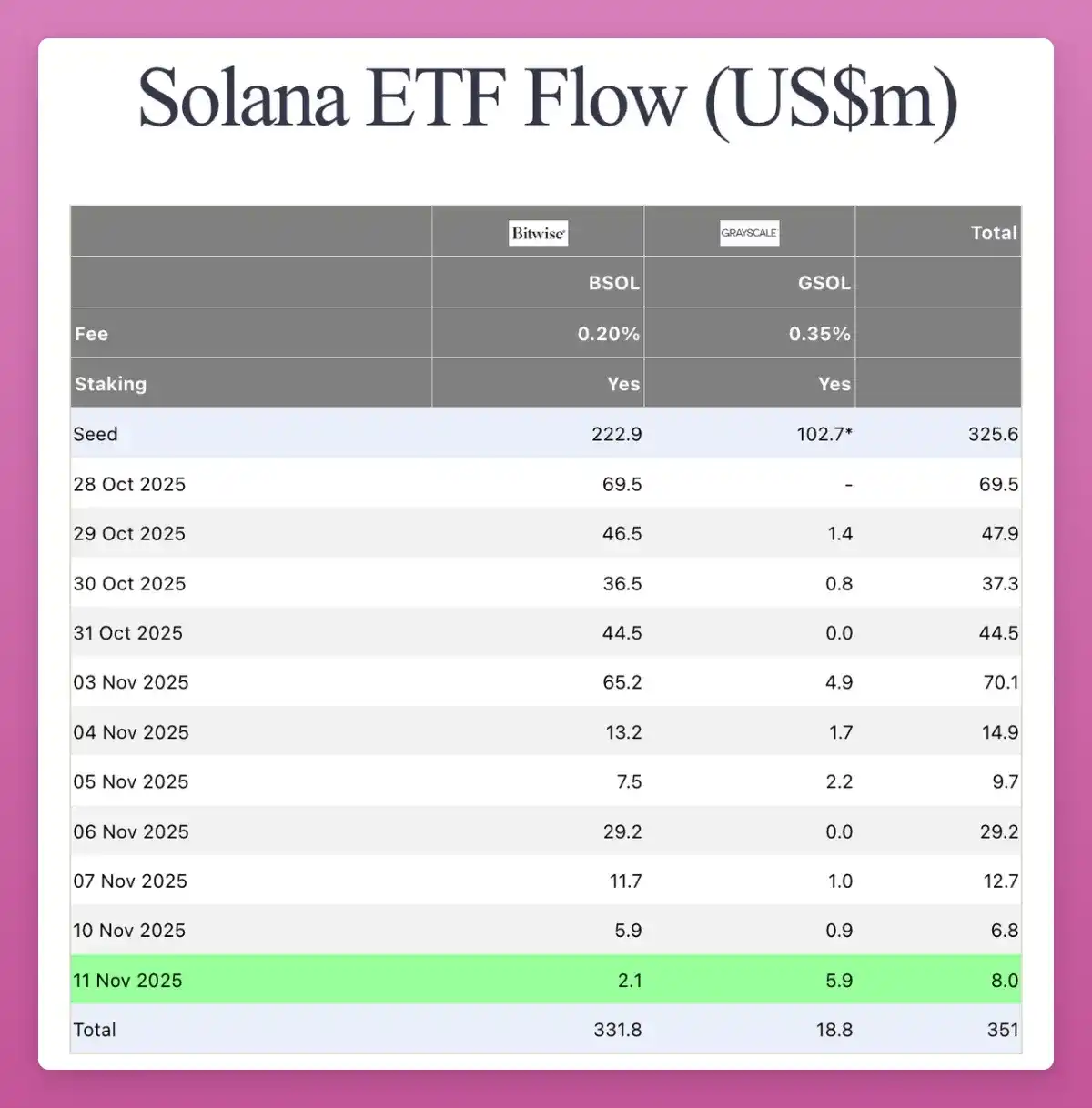
Some DAT companies have also started buying SOL in significant quantities:
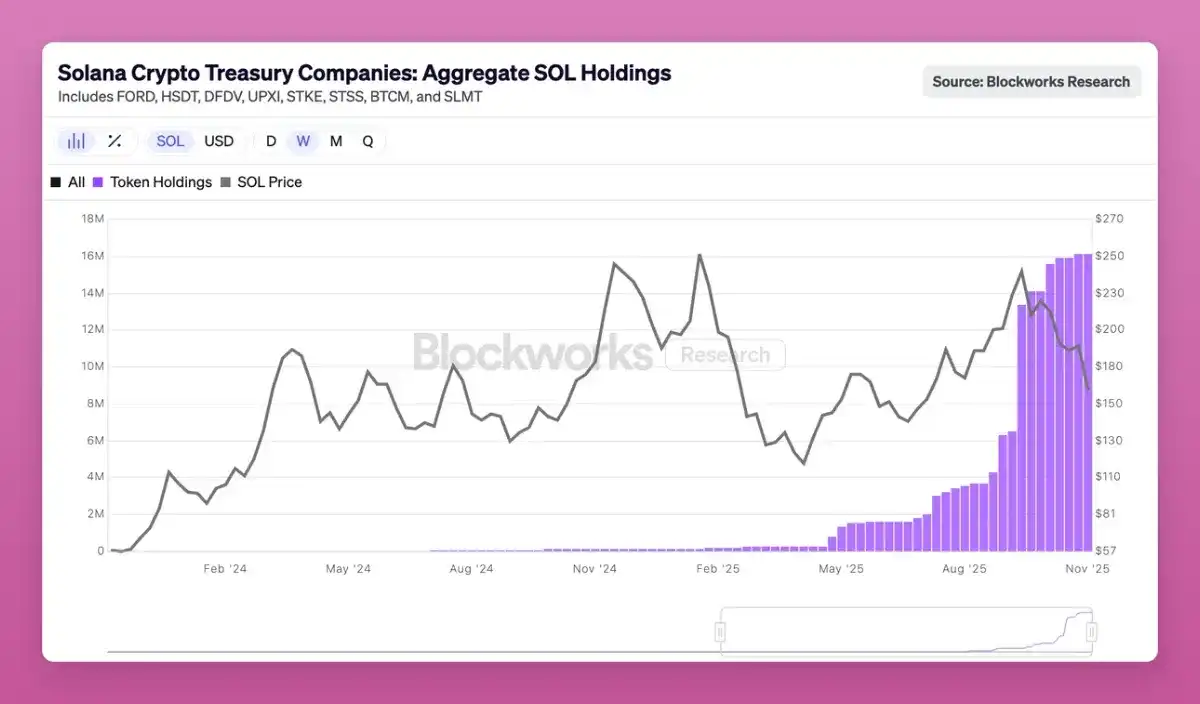
Currently, 2.9% of all circulating SOL is held by DAT companies, amounting to $25 billion, and you can read more about the SOL DAT structure in Helius's article.
Therefore, SOL now has the same TradFi infrastructure investors as BTC and ETH, including regulated funds and treasury companies, just on a smaller scale. SOL on-chain data is messy but still concentrated in early insiders and VC wallets. These tokens are slowly making their way into the hands of new institutional buyers through ETFs and treasury flows.
A significant turnover has already touched SOL; it just happened a cycle late.
Therefore, if BTC and to some extent ETH turnover is nearing completion, and the price could rise at any time, then the situation for SOL is not hard to predict.
What Will Happen Next
BTC turnover first ends, followed closely by ETH but slightly lagging, while SOL needs more time. So, where are we in this cycle?
In past cycles, the strategy was simple: BTC surged first, followed by ETH, and the wealth effect gradually emerged. People profited from mainstream cryptocurrencies and turned to lower market cap altcoins, thus boosting the entire market.
This time is different.
BTC is stagnant at a certain stage of the cycle, even as the price rises, with old players either switching to ETFs or cashing out to exit, eventually improving life outside of crypto. There's no wealth effect, no spillover effect, only the PTSD brought by FTX, and the hard work continues.
Altcoins are no longer competing with BTC for currency status but are turning to compete in usability, yield, and speculation. However, most products fail to meet these criteria. Currently recommended categories:
-Blockchain in Actual Use: Ethereum, Solana, maybe one or two more chains;
-Products with Cash Flow or Real Value Appreciation;
-Assets with unique needs that BTC cannot replace (such as ZEC);
-Infrastructure capable of attracting fees and attention;
-Stablecoins and RWAs.
The field of crypto will continue to innovate and experiment, so I don't want to miss out on this new hot spot, with everything else becoming noise.
The Uniswap fee switch activation is a key moment: while not the first, it is the most prominent DeFi protocol to date. Uniswap has forced all other protocols to follow suit and start redistributing fees to token holders (buyback).
5 out of 10 lending protocols have already shared revenue with token holders.
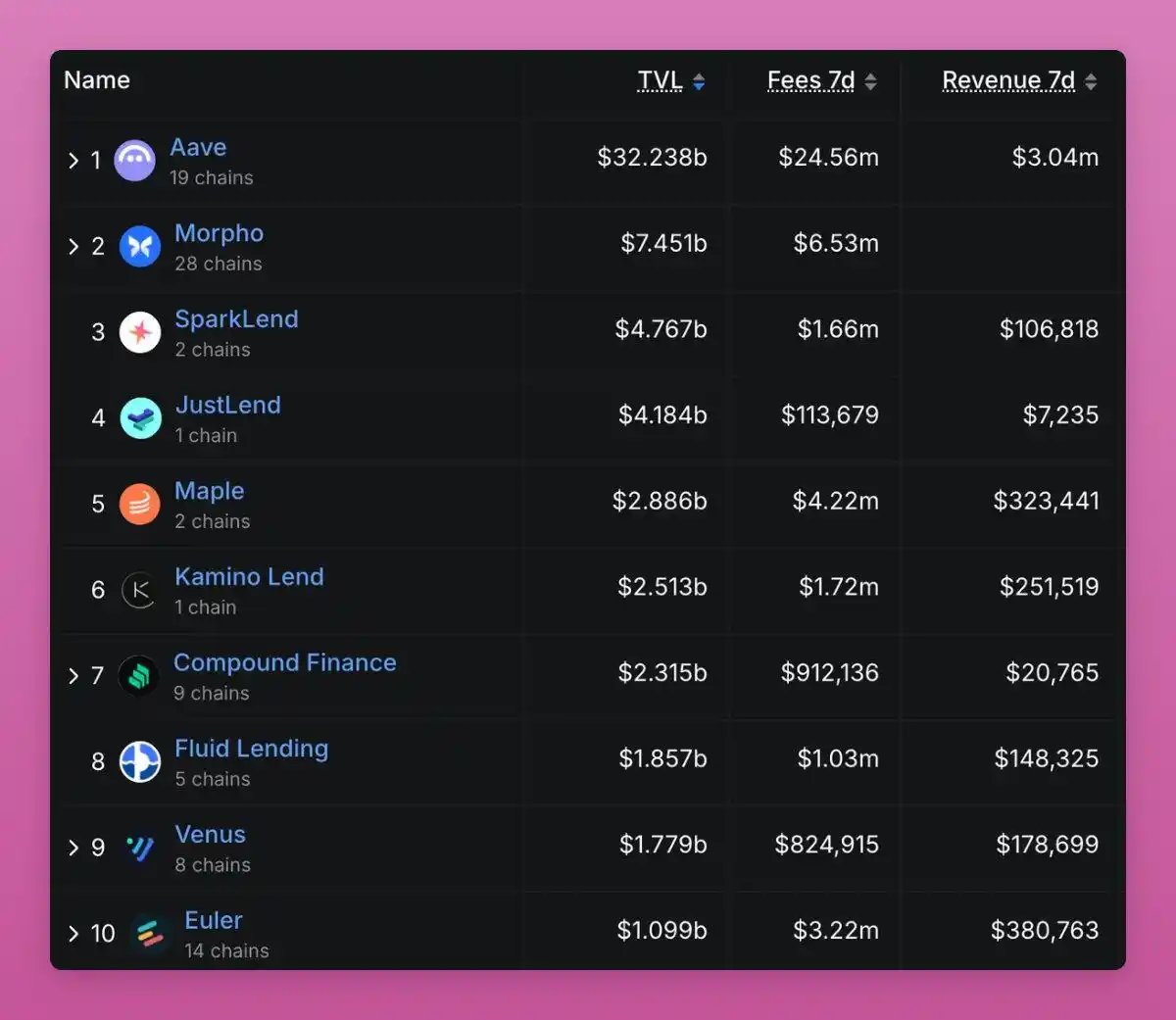
Thus, DAOs have become on-chain companies, with the value of their tokens dependent on the income they generate and redistribute. This will be the position of the next round of rotation.
You may also like

Best Crypto to Buy Now February 10 – XRP, Solana, Dogecoin
Key Takeaways XRP is set to revolutionize cross-border transactions, potentially reaching $5 by the end of Q2 with…

Kyle Samani Criticizes Hyperliquid in Explosive Post-Departure Market Commentary
Key Takeaways: Kyle Samani, former co-founder of Multicoin Capital, publicly criticizes Hyperliquid, labeling it a systemic risk. Samani’s…

Leading AI Claude Forecasts the Price of XRP, Cardano, and Ethereum by the End of 2026
Key Takeaways: XRP’s value is projected to reach $8 by 2026 due to major institutional adoption. Cardano (ADA)…

Bitcoin Price Prediction: Alarming New Research Cautions Millions in BTC at Risk of ‘Quantum Freeze’ – Are You Ready?
Key Takeaways Quantum Threat to Bitcoin: The rise of quantum computing presents a unique security challenge to Bitcoin,…
XRP Price Prediction: Could XRP Ultimately Surpass Bitcoin and Ethereum?
Key Takeaways XRP has maintained a strong position despite a recent 12% drop, suggesting potential for growth. Analyst…

Best Crypto to Buy Now February 6 – XRP, Solana, Bitcoin
Key Takeaways The cryptocurrency market is experiencing pressure due to a technology-sector selloff, affecting digital assets like Bitcoin.…

South Korea Broadens Crypto Market Investigation Following Bithumb’s $44 Billion Bitcoin Error
Key Takeaways South Korea intensifies scrutiny on cryptocurrency exchange operations after Bithumb’s significant Bitcoin transaction error. Regulatory bodies,…
Tom Lee-Supported Bitmine Dominates 3.6% of Ethereum Supply Post-Price Crash
Key Takeaways Bitmine Immersion Technologies now controls 3.6% of Ethereum’s total supply after strategic purchases during market downturns.…

XRP Yearly Returns Hit Record Low Since 2023
Key Takeaways XRP’s yearly returns are at their lowest since 2023, as the crypto market grapples with a…

BTC Traders Eye $50K as Potential Bottom: Key Metrics to Monitor This Week
Key Takeaways Traders are closely monitoring the potential bottom for Bitcoin at $50,000 as recent price movements suggest…

Fraudulent ‘XRP’ Issued Token Sparks Confusion on the XRP Ledger
Key Takeaways An imposter XRP token is causing bewilderment within the XRP community by being superficially identical to…

XRP Yearly Returns Reach Their Lowest Point Since 2023
Key Takeaways XRP’s weakest annual performance since 2023 highlights the ongoing struggles within the cryptocurrency market. Market dynamics…

Cardano ‘Midnight Fixes Everything’: Charles Hoskinson
Key Takeaways Cardano’s Midnight sidechain, launched in December 2025, is championed by Charles Hoskinson as a solution to…

SHIB Army Burns 3,564,772 SHIB, While Half Quadrillion Coins Remain in Circulation
Key Takeaways The Shiba Inu community has collectively burned nearly 3.5 million SHIB tokens recently, yet a substantial…

XRP Ledger Network Activity Decreases by 80% as Institutional Participation Wanes
Key Takeaways: Recent metrics indicate an 80% decline in XRP Ledger network activity, correlating with diminished institutional involvement.…

Michael Saylor Insists “We Will Not Be Selling” As Strategy (MSTR) Stock Breaks Out
Key Takeaways Strategy, formerly MicroStrategy, remains highly sensitive to Bitcoin’s volatile market, with its stock performance closely mirroring…

Brad Garlinghouse Adds Personal Touch to XRP Community Day with Exclusive Merch
Key Takeaways Brad Garlinghouse, CEO of Ripple, has personally signed exclusive merchandise for XRP Community Day, adding excitement…

PIPPIN Price Surge Signals Potential Breakout Despite Investor Selling
Key Takeaways PIPPIN has experienced a significant rally, with its price increasing by 159%, nearing its all-time high.…
Best Crypto to Buy Now February 10 – XRP, Solana, Dogecoin
Key Takeaways XRP is set to revolutionize cross-border transactions, potentially reaching $5 by the end of Q2 with…
Kyle Samani Criticizes Hyperliquid in Explosive Post-Departure Market Commentary
Key Takeaways: Kyle Samani, former co-founder of Multicoin Capital, publicly criticizes Hyperliquid, labeling it a systemic risk. Samani’s…
Leading AI Claude Forecasts the Price of XRP, Cardano, and Ethereum by the End of 2026
Key Takeaways: XRP’s value is projected to reach $8 by 2026 due to major institutional adoption. Cardano (ADA)…
Bitcoin Price Prediction: Alarming New Research Cautions Millions in BTC at Risk of ‘Quantum Freeze’ – Are You Ready?
Key Takeaways Quantum Threat to Bitcoin: The rise of quantum computing presents a unique security challenge to Bitcoin,…
XRP Price Prediction: Could XRP Ultimately Surpass Bitcoin and Ethereum?
Key Takeaways XRP has maintained a strong position despite a recent 12% drop, suggesting potential for growth. Analyst…
Best Crypto to Buy Now February 6 – XRP, Solana, Bitcoin
Key Takeaways The cryptocurrency market is experiencing pressure due to a technology-sector selloff, affecting digital assets like Bitcoin.…


 App
App