
- Buy Crypto
- Markets
 Futures
- Spot
- Copy Trade
- Earn
- More
Trump’s crypto ties derail bipartisan stablecoin push in senate
By: cryptosheadlines|2025/05/08 12:00:08
0
Share
Airdrop Is Live CaryptosHeadlines Media Has Launched Its Native Token CHT. Airdrop Is Live For Everyone, Claim Instant 5000 CHT Tokens Worth Of $50 USDT. Join the Airdrop at the official website, CryptosHeadlinesToken.com A bipartisan stablecoin bill (GENIUS Act) faces Senate roadblocks due to Democratic concerns over Trump’s crypto ties.Democrats cite Trump’s memecoin, stablecoin involvement, and potential Binance stake as raising conflict-of-interest issues.Nine Senate Democrats (including previous supporters) now oppose the bill’s current form, demanding stronger safeguards.What recently appeared as a rare opportunity for bipartisan agreement on cryptocurrency regulation has hit a significant roadblock, directly attributable to President Donald Trump’s expanding personal and business entanglements within the digital asset space.Congressional Democrats, citing concerns over potential conflicts of interest and personal enrichment, are now expressing strong reservations about advancing landmark stablecoin legislation, jeopardizing its path forward.The legislation in question, the Guiding and Establishing National Innovation for US Stablecoins of 2025 (GENIUS Act), successfully cleared the Senate Banking Committee in March with support from both parties, signaling a potential quick win for the crypto industry seeking regulatory clarity.However, momentum has stalled as scrutiny intensifies over President Trump’s various crypto endeavors.These activities include the pre-inauguration launch of his own $TRUMP meme coin, reported involvement with a new stablecoin (USD1) via the Trump family-backed World Liberty Financial, suggestions of a potential family stake in the major exchange Binance (linked to an Abu Dhabi investment deal using USD1), and a partnership between the Trump Media & Technology Group and Crypto.com.Furthermore, an upcoming dinner exclusively for top holders of his meme coin has drawn criticism, reportedly even raising eyebrows among crypto-supportive Republicans like Senator Cynthia Lummis.Democrats pump brakes on stablecoin billThis backdrop prompted nine Senate Democrats, including notable figures who previously voted for the bill in committee, to issue a statement over the weekend declaring they would not support the GENIUS Act in its current form.While their official statement highlighted necessary improvements – citing the need for “stronger provisions on anti-money laundering, foreign issuers, national security, preserving the safety and soundness of our financial system, and accountability” – other prominent Democrats linked their opposition more directly to the President’s actions.“Since the committee vote, president Trump’s aggressive efforts to profit from stablecoins and the obvious opportunities for bribery and other influence peddling have demonstrated why it is vital that we make meaningful, substantive reforms to the bill,” stated Senator Elizabeth Warren, a leading voice on the Banking Committee, in a Monday speech.Pushback extends beyond stablecoin specificsThe resistance reflects a growing unease among Democrats about potentially legitimizing or facilitating activities they perceive as problematic.The concern isn’t necessarily directed at stablecoin regulation itself – the senators’ statement acknowledged that “the absence of regulation leaves consumers unprotected.”Rather, the opposition targets the current legislative vehicle in the specific context of the President’s apparent conflicts.Democrats appear unwilling to lower regulatory guardrails or advance crypto legislation that could be seen as enabling potential corruption at the highest level.Further underscoring this sentiment, Democratic Senator Jeff Merkley introduced the “End Crypto Corruption Act” on Tuesday.This proposed legislation aims specifically to prohibit the president and other high-ranking federal officials from issuing, sponsoring, or endorsing digital assets.“Currently, people who wish to cultivate influence with the president can enrich him personally by buying cryptocurrency he owns or controls,” Merkley asserted in a statement accompanying the bill’s introduction.Implications for broader crypto regulationThe impasse over the stablecoin bill casts a shadow over prospects for more comprehensive crypto market structure legislation, something the industry has sought for years.The political friction generated by the President’s crypto ties makes navigating any crypto-related bill more challenging.Representative Maxine Waters, the leading Democrat on the House Financial Services Committee, also signaled resistance this week, objecting to a joint hearing intended to address these broader market structure issues.Financial policy analyst Jaret Seiberg of TD Cowen viewed the situation primarily through a political lens, noting that Trump’s personal stake complicates Democratic support for a bill potentially regulating his family’s business interests.However, he still predicted the stablecoin bill could eventually pass, potentially after Democrats extract significant concessions, given the crypto lobby’s considerable political influence and resources.Industry lobbyists, meanwhile, appear concerned by the stalling momentum, issuing statements urging lawmakers to move the GENIUS Act forward to provide necessary regulatory clarity, support stablecoin adoption, and maintain US leadership in the digital economy.The immediate future of the stablecoin bill, however, now appears hostage to the political fallout from the President’s controversial foray into the crypto world.Share this articleCategoriesTagsSource link
You may also like

Particle Founder: The entrepreneurial insights I have gained the most from in the past year
Stop lean startup, stop lightning entrepreneurship, and think carefully about what your product aspirations are.

Huang Renxun's latest podcast transcript: The future of Nvidia, the development of embodied intelligence and agents, the explosion of inference demand, and the public relations crisis of artificial intelligence
The competition in the future is not just about whose model is larger or whose computing power is stronger, but also about who understands the industry better, who can embed AI more deeply into real processes, and who can organize these capabilities into a runnable and scalable system.

OKX Ventures Research Report: AI Agent Economic Infrastructure Research Report (Part 1)
The existing infrastructure is hostile to the Agent economy. Agents can think and act independently at the "capability level," but at the "economic level," they are still locked into infrastructure designed for humans.

The migration of settlement rights: B18 and the institutional starting point of on-chain banks
In the traditional system, banks decide the settlement; in the on-chain system, code begins to take over this responsibility.

From Tencent and Circle: Looking at the Simple and Difficult Questions of Investment
The AI narrative continues to ferment, but the recent performance of related stocks varies, with some in the midst of summer and others as if in winter.

The second half of stablecoins no longer belongs to the crypto circle
What Coinbase doesn't want, Mastercard is eager to buy.

Cursor "Shell" Kimi Controversy Reversed: From Copyright Infringement Allegations to Authorized Collaboration, China's Open Source Model Once Again Becomes a Global AI Foundation
Cursor was accused of being based on Kimi K2.5, which sparked controversy, and was later confirmed to be compliant through Fireworks AI due diligence.

The Real Reason Tokens Don't Sell: 90% of Crypto Projects Overlook Investor Relations
Provide an Investor Relations Best Practices Guide for Crypto Projects.

Is the income of pump.fun real, earning a million dollars a day despite the market downturn?
If it can really earn this much, what is the reason for the low price of $PUMP?

The real reason why tokens are not selling: 90% of crypto projects neglect investor relations
Investor Relations Practice Guide for Cryptocurrency Projects.

Who is the true winner of the "Tokenization" narrative?
Virtually everyone benefits, but the reason for the benefit, the timing, and the underlying logic are completely different.

Moss: The Era of AI-Traded by Anyone | Project Introduction
AI Trading Agent is rapidly growing its infrastructure.

Chip Smuggling Case Exposes Regulatory Loophole | Rewire News Evening Update
AI chips have become a strategic asset more sensitive than missiles

How a Structured AI Crypto Trading Bot Won at the WEEX Hackathon
Ritmex demonstrates how disciplined risk control and structured signals can make an AI crypto trading bot more stable and reliable on WEEX, highlighting the importance of combining execution discipline with scalable AI trading systems.

Old Indicator Fails, Three Major New Signals Emerge: BTC True Bottom May Still Be Below $60K
When the grocery shopping auntie on the subway, or Tony the hairdresser, start asking you about BTC, crypto, and cryptocurrency investments, selling immediately will be the only best option.

Meeting OpenClaw Founder at a Hackathon: What Else Can Lobsters Do?
Imperial College London MetaGame: AI Agent × Web3 Landing Three Major Directions.
Huang Renxun's Latest Podcast Transcript: NVIDIA's Future, Embodied Intelligence and Agent Development, Soaring Demand for Inferencing, and AI's PR Crisis
The future of competition is not only about whose model is bigger, whose computing power is stronger, but also about who understands the industry better, who can more deeply integrate AI into real processes, and who can organize these capabilities into a set of executable, scalable systems
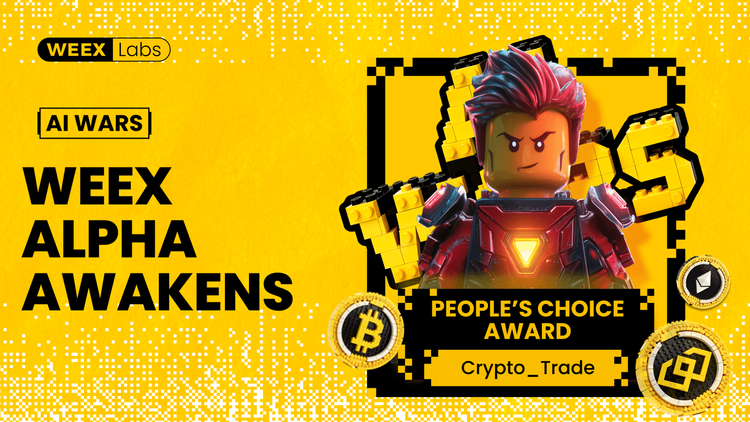
How a Structured AI Crypto Trading Bot Won at the WEEX Hackathon
Crypto_Trade shows how structured inputs and controlled adaptability can build a more stable and reliable AI crypto trading bot within the WEEX AI Trading Hackathon, highlighting a practical path toward scalable AI trading systems.
Particle Founder: The entrepreneurial insights I have gained the most from in the past year
Stop lean startup, stop lightning entrepreneurship, and think carefully about what your product aspirations are.
Huang Renxun's latest podcast transcript: The future of Nvidia, the development of embodied intelligence and agents, the explosion of inference demand, and the public relations crisis of artificial intelligence
The competition in the future is not just about whose model is larger or whose computing power is stronger, but also about who understands the industry better, who can embed AI more deeply into real processes, and who can organize these capabilities into a runnable and scalable system.
OKX Ventures Research Report: AI Agent Economic Infrastructure Research Report (Part 1)
The existing infrastructure is hostile to the Agent economy. Agents can think and act independently at the "capability level," but at the "economic level," they are still locked into infrastructure designed for humans.
The migration of settlement rights: B18 and the institutional starting point of on-chain banks
In the traditional system, banks decide the settlement; in the on-chain system, code begins to take over this responsibility.
From Tencent and Circle: Looking at the Simple and Difficult Questions of Investment
The AI narrative continues to ferment, but the recent performance of related stocks varies, with some in the midst of summer and others as if in winter.
The second half of stablecoins no longer belongs to the crypto circle
What Coinbase doesn't want, Mastercard is eager to buy.


 App
App