
What It Misses For Workplace Growth
By: bitcoin ethereum news|2025/05/08 22:00:11
0
Share


New UCLA Study On Improving Curiosity: What It Misses For Workplace Growth A recent UCLA study has sparked interest by revealing that curiosity can increase as people age. The Times and other outlets have shared these findings with headlines like “Old Dogs Really Can Learn New Tricks,” celebrating the idea that older adults may experience a renewed sense of curiosity later in life. That sounds like good news, but it also raises an important question: what kind of curiosity are we talking about, and does it actually help in the workplace? The study distinguishes between state curiosity and trait curiosity. State curiosity is that momentary flash of interest when someone hears about a new idea, reads an eye-catching article, or sees a documentary and wants to know more. Trait curiosity is different. It’s the deep, sustained drive that leads people to ask better questions, challenge assumptions, and seek out growth over time. While the study suggests that state curiosity can increase with age, the author, psychologist Alan Castel, also noted that trait curiosity did not show the same improvement. He explained that while trait curiosity remains relatively stable or may even decline, a rise in state curiosity could serve as a pathway to rebuilding it over time. That distinction is critical for organizations trying to fuel innovation and performance. In the workplace, it’s not enough to occasionally be curious. Lasting curiosity is what leads people to solve complex problems, improve processes, and collaborate more effectively. That kind of curiosity doesn’t just happen. It has to be supported. Why State Curiosity Alone Is Not Enough for Growth Why State Curiosity Alone Is Not Enough for Growth The spike in curiosity described in the UCLA study focuses on situational curiosity, the kind sparked by personal interests or random encounters with something new. While this is encouraging, it isn’t the type of curiosity that consistently improves performance or engagement at work. The kind that does is trait curiosity, and that’s much harder to cultivate. The danger in promoting state curiosity as the full solution is that it gives organizations a false sense of progress. If employees are showing interest in one-off learning moments or surface-level exploration, it may look like curiosity is thriving. But if they aren’t following through, challenging norms, or applying that interest to real work, the benefits are short-lived. How Trait Curiosity Drives Real Workplace Impact How Trait Curiosity Drives Real Workplace Impact Trait curiosity is tied to long-term cognitive resilience and behavioral adaptability. It’s what keeps people asking questions even when things are working “well enough.” It fuels continuous improvement. It encourages people to speak up when they see risks, explore alternatives when resources are limited, and keep learning even after formal training ends. That kind of sustained curiosity is what leads to bottom-line results. In recent research studying executives across multiple industries, 80% of small to midsize companies reported saving over $100,000 annually due to increased innovation, communication, and efficiency tied to curiosity-based initiatives. Larger companies saw that number exceed $1 million. These weren’t major transformations led by consultants or billion-dollar tech. They were the result of people consistently asking better questions. What Stops Curiosity From Taking Hold in the Workplace What Stops Curiosity From Taking Hold In The Workplace One reason trait curiosity doesn’t flourish is that it’s often shut down, sometimes unintentionally. My research found that there are four key factors that inhibit curiosity at work: fear, assumptions, technology, and environment. Fear can show up in the form of hesitation. Employees may avoid asking questions because they don’t want to appear uninformed. Assumptions lead people to think they already know what will happen if they try something new. Technology can be a barrier when people rely on shortcuts or avoid learning more robust tools. Environment plays a role when leaders discourage experimentation or reward predictability over insight. These four barriers, what I call the FATE factors, don’t just appear out of nowhere. They build up over time. And unless they’re addressed directly, they will smother even the most promising curiosity spike. How Organizations Can Turn Curiosity Into Long-Term Growth How Organizations Can Turn Curiosity Into Long-Term Growth The solution is to build the kind of culture where trait curiosity can grow. That starts by removing fear of failure, questioning outdated assumptions, using technology as a tool instead of a crutch, and creating an environment that encourages exploration without punishment. Give employees the chance to explore projects that matter to them. Encourage them to ask “why” and “what if” in meetings without worrying about judgment. Provide opportunities for self-directed learning that align with their actual interests, not just compliance. And measure curiosity over time to see whether engagement, communication, and innovation are improving. Why This Study On Curiosity Still Matters And Where It Falls Short Why This Study On Curiosity Still Matters And Where It Falls Short The UCLA study is a helpful reminder that curiosity doesn’t disappear with age. If anything, it can be reignited. But reigniting something and keeping it lit are two different things. Just because someone finds a new topic interesting doesn’t mean they’ll take the next step without support. For curiosity to create lasting change, it has to move beyond a passing interest and become a way of thinking. That means changing behavior, removing barriers, and tracking progress. None of that happens passively. The Bottom Line On Curiosity And Aging At Work The Bottom Line On Curiosity And Aging At Work This new research is a good start, but it doesn’t address what organizations actually need. A moment of interest doesn’t lead to mastery. A spike in curiosity doesn’t guarantee innovation. What matters is whether that interest becomes a habit, a mindset, and eventually a driver of business results. Leaders looking to create real change should not settle for temporary sparks. They need to invest in the structures and support that allow curiosity to thrive long term. Because when trait curiosity becomes part of the culture, everything from performance to retention to employee satisfaction improves, and those are the outcomes that matter most. Source: https://www.forbes.com/sites/dianehamilton/2025/05/08/new-ucla-study-on-improving-curiosity-what-it-misses-for-workplace-growth/
You may also like

Why have foreign exchange stablecoins never taken off?
Rather than issuing a local currency stablecoin from scratch, it is better to build a layer of foreign currency pricing on top of a USD stablecoin, allowing users to enjoy the liquidity of the dollar while keeping accounts in local currency.

AIDC, computing power leasing, and cloud: The "three-part thesis" of AI transformation in cryptocurrency mining farms
The "AI transformation" of cryptocurrency mining farms is not just a slogan; it is unfolding in three recognizable stages.

Futu has had all its illegal gains confiscated, reminding cryptocurrency exchanges
Even if foreign financial institutions obtain licenses abroad, as long as you are effectively providing financial services to residents in mainland China, Chinese regulatory authorities may evaluate your actions according to Chinese law.

Football, Web3 & Champions' Energy: A Recap of WEEX's LALIGA VIP Meetup in Barcelona
Relive WEEX's exclusive LALIGA VIP Meetup in Barcelona with football legend Fernando Morientes. From a fireside chat and on-site WEEX x LALIGA signing to partner awards and a live LALIGA match broadcast, discover how WEEX connected football culture, Web3, and community.

Pizza, Poker & AI Trading: A Recap of WEEX Crypto Pizza Day in Dubai
Relive WEEX Crypto Pizza Day in Dubai, where the MENA crypto community gathered at WEEX Dubai Studio to celebrate Bitcoin Pizza Day with pizza, poker, networking, and a live AI trading competition. Discover how WEEX turned a historic crypto milestone into a hands-on AI trading experience.

IOSG Founder: Please tell Vitalik the truth, let the OGs who have enjoyed the industry's dividends enlighten the young people
The wage earners freeze to death on the road, the sellers of goods die of thirst on the way. The weavers of brocade wear coarse cloth, and the grain growers do not have enough to eat.

Morning Report | SpaceX reveals it holds approximately $1.45 billion in Bitcoin; Nvidia's Q1 financial report shows revenue of $81.6 billion; Manus plans to raise $1 billion for buyback business
Overview of Important Market Events on May 21
Insiders: DeepSeek is forming a Harness team to compete with Claude Code
DeepSeek Code is coming.
SpaceX officially submitted its prospectus, unveiling the largest IPO in history
SpaceX's public market debut could take place as early as June, making it the first in a series of giant IPOs from AI companies, with OpenAI and Anthropic also waiting for the right moment.

The financial changes under the new SEC regulations: Opportunities and regulatory red lines behind "tokenized stocks"
In-depth analysis of "tokenized stocks": The SEC's advancement of an innovation exemption framework has sparked heated discussions, revealing the real risks behind third-party "synthetic asset" certificates and 24/7 trading.

Blockchain Capital Partner: The structure of on-chain dual-layer capital is still in the early stages of value discovery
How can the on-chain economy build a capital structure that promotes open innovation while also considering institutional scale?

Secured over $60 million in funding from Dragonfly, Sequoia, and others, learn about the on-chain derivatives protocol Variational | CryptoSeed
What is the difference with Hyperliquid?

I tested with $10,000: zero wear and tear, annualized 8%, and can earn points (with complete tutorial + screenshots)
Perps DEX newcomer StandX launches native stablecoin DUSD, achieving a real APY of 8.46% with its innovative three-tier yield mechanism, breaking the 3% traditional stablecoin interest rate ceiling.

Eight departments take strong measures to regulate cross-border brokers, what do you think?
This regulatory action, known as the "Final Battle for the Rectification of Cross-Border Brokers," will completely end the gray era of unlicensed operations by foreign brokers in the domestic market and reshape the entire market landscape for cross-border investment by mainland residents.
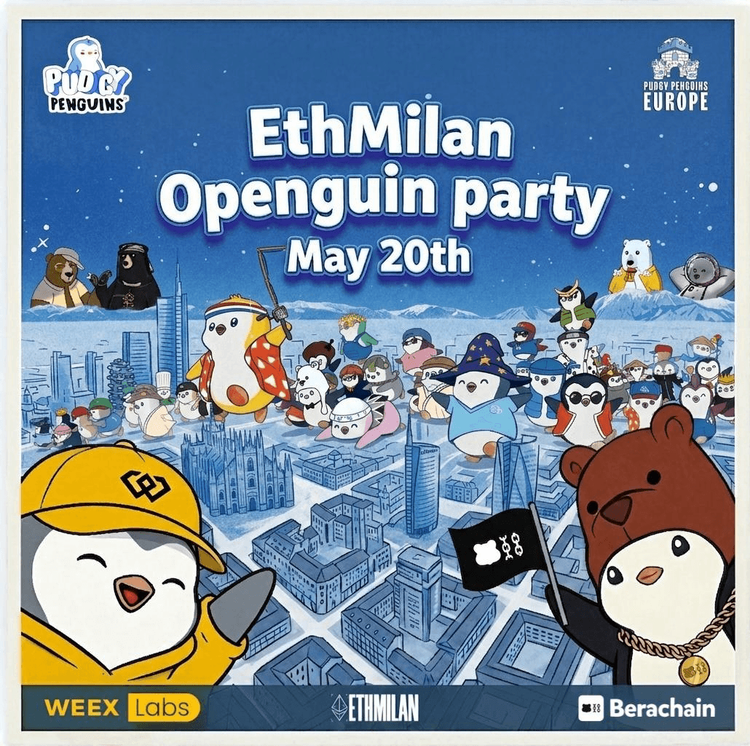
Cheers, Charts & AI: A Recap of WEEX Labs' Openguin Party Energy at ETHMilan 26
Looking for the most exciting web3 events in Europe? Relive the Openguin Party at ETHMilan 2026 — co-hosted by WEEX Labs, Pudgy Penguins and Berachain . This rooftop Pudgy Penguins Event brought together Pudgy Penguins Crypto fans, AI traders, and industry leaders for a 20-minute live AI trading competition under the Milan sky. Discover how WEEX is redefining AI-powered trading.

Morning Report | Deloitte acquires crypto infrastructure company Blocknative; stablecoin company Checker completes $8 million financing; a16z may have become the largest external institutional holder of HYPE
Overview of Important Market Events on May 20
Interpretation of xBubble SOP: Packaging Vibe Coding for non-technical users
DAPPOS has launched the low-threshold AI application xBubble, which innovatively automates the packaging of complex large model workflows with an SOP system, allowing users with no technical background to complete professional-level AI tasks with just one sentence.
From Followers to Price Setters: The Role of the Crypto Market is Reversing
The encryption platform successfully achieved precise pre-listing pricing on CBRS, indicating that Crypto is gradually transforming from a follower of traditional finance into a new pricing hub for global assets through innovative mechanisms.
Why have foreign exchange stablecoins never taken off?
Rather than issuing a local currency stablecoin from scratch, it is better to build a layer of foreign currency pricing on top of a USD stablecoin, allowing users to enjoy the liquidity of the dollar while keeping accounts in local currency.
AIDC, computing power leasing, and cloud: The "three-part thesis" of AI transformation in cryptocurrency mining farms
The "AI transformation" of cryptocurrency mining farms is not just a slogan; it is unfolding in three recognizable stages.
Futu has had all its illegal gains confiscated, reminding cryptocurrency exchanges
Even if foreign financial institutions obtain licenses abroad, as long as you are effectively providing financial services to residents in mainland China, Chinese regulatory authorities may evaluate your actions according to Chinese law.
Football, Web3 & Champions' Energy: A Recap of WEEX's LALIGA VIP Meetup in Barcelona
Relive WEEX's exclusive LALIGA VIP Meetup in Barcelona with football legend Fernando Morientes. From a fireside chat and on-site WEEX x LALIGA signing to partner awards and a live LALIGA match broadcast, discover how WEEX connected football culture, Web3, and community.
Pizza, Poker & AI Trading: A Recap of WEEX Crypto Pizza Day in Dubai
Relive WEEX Crypto Pizza Day in Dubai, where the MENA crypto community gathered at WEEX Dubai Studio to celebrate Bitcoin Pizza Day with pizza, poker, networking, and a live AI trading competition. Discover how WEEX turned a historic crypto milestone into a hands-on AI trading experience.
IOSG Founder: Please tell Vitalik the truth, let the OGs who have enjoyed the industry's dividends enlighten the young people
The wage earners freeze to death on the road, the sellers of goods die of thirst on the way. The weavers of brocade wear coarse cloth, and the grain growers do not have enough to eat.


Customer Support:@weikecs
Business Cooperation:@weikecs
Quant Trading & MM:bd@weex.com
VIP Program:support@weex.com
